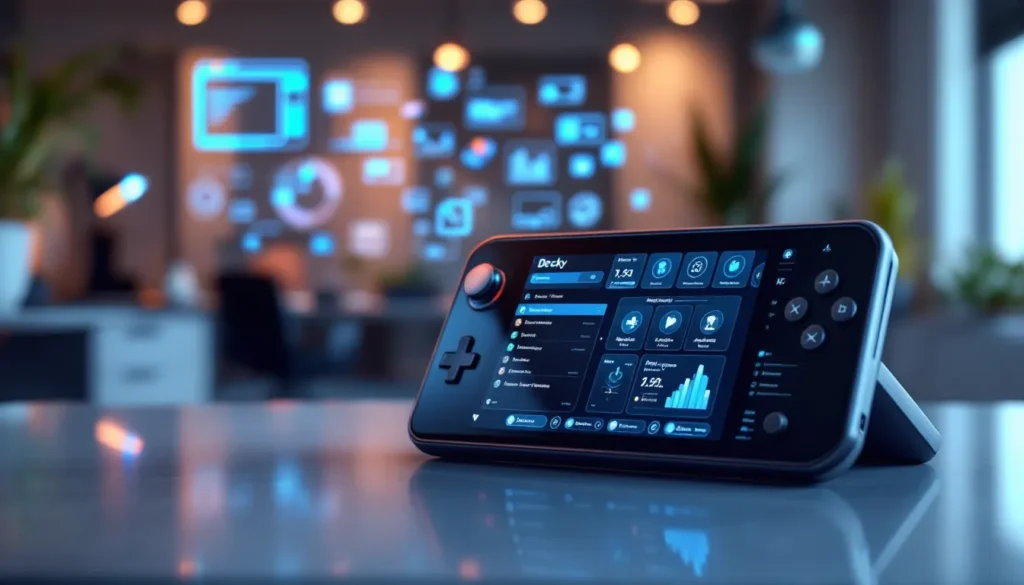
The Steam Deck is a handheld gaming PC made by Valve Corporation. It lets players enjoy their Steam library anywhere, on the couch, during travel, or in bed. Since its 2022 launch, the Steam Deck has changed how people think about portable gaming. It combines the power of a gaming PC with the convenience of a handheld device.
This guide explains what the Steam Deck is, how it works, and who should buy one. Readers will learn about its hardware, features, pricing, and game compatibility.
Table of Contents
ToggleKey Takeaways
- The Steam Deck is a handheld gaming PC made by Valve that lets players enjoy their entire Steam library anywhere.
- It runs on a custom AMD APU with Zen 2 CPU and RDNA 2 graphics, delivering desktop-class performance in a portable form factor.
- Two models are available: the LCD version starting at $399 and the OLED version starting at $549 with improved display, battery life, and Wi-Fi 6E.
- Over 10,000 games are Verified or Playable on the Steam Deck through Valve’s compatibility program and Proton translation layer.
- The Steam Deck is ideal for PC gamers who travel, have large Steam libraries, or want to play games away from their desk.
- Desktop Mode transforms the Steam Deck into a full Linux PC, supporting web browsing, productivity apps, and non-Steam game launchers.
Understanding the Steam Deck Hardware
The Steam Deck runs on a custom AMD APU (Accelerated Processing Unit). This chip combines a Zen 2 CPU with RDNA 2 graphics architecture. The result is desktop-class performance in a portable form factor.
Here are the core hardware specs:
- CPU: 4-core, 8-thread Zen 2 processor running at 2.4–3.5 GHz
- GPU: 8 RDNA 2 compute units at up to 1.6 GHz
- RAM: 16GB LPDDR5 unified memory
- Display: 7-inch LCD touchscreen (1280×800 resolution) at 60Hz
- Battery: 40Wh battery providing 2–8 hours of gameplay
The Steam Deck weighs about 669 grams (1.47 pounds). It measures 298mm x 117mm x 49mm. The device feels solid in hand, though it’s larger than a Nintendo Switch.
Valve designed the controls with PC gaming in mind. Players get two thumbsticks, a D-pad, ABXY buttons, four back buttons, and two trackpads. The trackpads work well for games that need mouse input. This makes the Steam Deck suitable for strategy games and other genres that struggle on traditional controllers.
Storage options vary by model, but all versions support microSD cards for expansion. The device also includes USB-C, Bluetooth 5.0, and Wi-Fi connectivity.
Key Features and Capabilities
The Steam Deck offers several features that set it apart from other handheld gaming devices.
SteamOS and Desktop Mode
The Steam Deck runs SteamOS 3.0, a Linux-based operating system. The interface looks like a gaming console, simple and easy to use. But here’s where it gets interesting: users can switch to Desktop Mode. This transforms the Steam Deck into a full Linux PC. They can browse the web, install apps, and even run productivity software.
Docking and External Display Support
Valve sells an official Steam Deck Dock. It connects to TVs and monitors via HDMI. Players can use keyboards, mice, and other USB peripherals. The Steam Deck becomes a desktop gaming PC when docked. Third-party docks work too, offering more affordable options.
Quick Suspend and Resume
The Steam Deck suspends games instantly when users press the power button. They can resume right where they left off, even days later. This feature mirrors what console gamers expect but wasn’t common on PC gaming before.
Customizable Controls
Every input on the Steam Deck can be remapped. Valve’s controller configuration tool lets users create custom profiles. Community profiles are available for thousands of games. This flexibility means almost any PC game can work with the Steam Deck’s controls.
Remote Play and Cloud Gaming
The Steam Deck supports Steam Remote Play. Users can stream games from their main PC to the handheld device. It also runs cloud gaming services like Xbox Cloud Gaming and GeForce NOW through web browsers.
Steam Deck Models and Pricing Options
Valve currently sells two main versions of the Steam Deck: the LCD model and the OLED model.
Steam Deck LCD
The original Steam Deck LCD starts at $399 for the 256GB version. This model uses a 7-inch IPS LCD screen. It offers excellent value for players who want to try handheld PC gaming without spending too much.
Steam Deck OLED
Released in late 2023, the Steam Deck OLED brings major upgrades:
- Display: 7.4-inch HDR OLED screen with 1280×800 resolution and 90Hz refresh rate
- Battery: Larger 50Wh battery (25% increase)
- Storage: 512GB or 1TB options
- Wi-Fi: Upgraded to Wi-Fi 6E
- Weight: Slightly lighter at 640 grams
The Steam Deck OLED costs $549 for the 512GB model and $649 for the 1TB version.
Both models play the same games at the same performance levels. The OLED version offers better visuals, longer battery life, and faster Wi-Fi. Budget-conscious buyers can stick with the LCD model and still enjoy a great experience.
Game Compatibility and the Steam Library
The Steam Deck gives players access to their entire Steam library. That’s thousands of games, from indie titles to AAA releases.
Steam Deck Verified Program
Valve tests games for Steam Deck compatibility. Each game receives one of four ratings:
- Verified: Works perfectly out of the box
- Playable: Works with minor adjustments
- Unsupported: Currently doesn’t work
- Unknown: Not yet tested
As of late 2024, over 10,000 games are Verified or Playable. Popular titles like Elden Ring, Baldur’s Gate 3, Hades, and Cyberpunk 2077 run well on the Steam Deck.
Proton Compatibility Layer
The Steam Deck runs Linux, but most PC games are built for Windows. Valve’s Proton compatibility layer translates Windows games to run on Linux. It works automatically, players just click “Play” like normal.
Proton keeps improving. Games that didn’t work at launch often become playable after updates. The community at ProtonDB.com tracks compatibility and shares fixes.
Non-Steam Games
The Steam Deck can run games from other stores too. Players can install the Epic Games Store, GOG, and other launchers through Desktop Mode. Tools like Heroic Launcher make this process easier. Emulators also work, letting players enjoy retro games from older consoles.
Who Should Consider Buying a Steam Deck
The Steam Deck isn’t for everyone. But it’s perfect for certain types of gamers.
PC gamers who travel frequently benefit most from the Steam Deck. They can continue playing their existing library on planes, trains, or hotel rooms. No need to buy games twice or maintain separate save files, Steam Cloud syncs progress automatically.
Players with large Steam libraries get immediate value. Those hundreds of games from Steam sales? They’re now portable. The Steam Deck makes older purchases feel new again.
Couch gamers appreciate playing PC games away from a desk. The Steam Deck works great for indie games, RPGs, and turn-based titles while watching TV or relaxing in bed.
Tinkerers and tech enthusiasts love the Steam Deck’s openness. They can install Windows, run emulators, modify the software, and experiment freely. Valve encourages this, they even provide repair guides and sell replacement parts.
The Steam Deck might not suit competitive multiplayer gamers who need high refresh rates and ultra-low latency. It’s also not ideal for those who only play a handful of modern AAA games that push hardware limits.