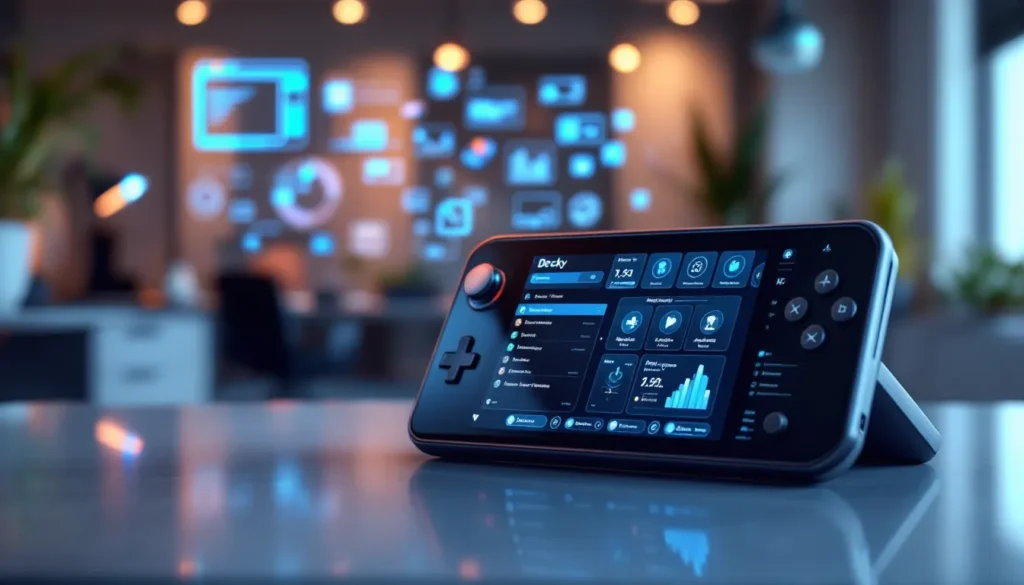

If you own a Steam Deck, you’ve probably heard whispers about Decky in gaming forums and Discord servers. But what exactly is it, and more importantly, does it actually enhance your handheld gaming experience? The short answer: absolutely. Decky is a plugin loader that transforms your Steam Deck from a capable gaming device into a fully customizable powerhouse. It’s not required to use your Steam Deck, plenty of players are perfectly happy with stock firmware, but once you experience what plugins can do, going back feels like playing with one hand tied behind your back. Whether you’re chasing frame rate improvements, managing a library that rivals a game studio’s catalog, or diving into retro emulation, Decky and its plugin ecosystem make it possible. This guide covers everything from initial setup to advanced customization, with specific recommendations for decky steam deck plugins that’ll elevate your portable gaming in 2026.
Table of Contents
ToggleKey Takeaways
- Decky is a free, open-source plugin loader that transforms your Steam Deck into a fully customizable gaming device with performance monitoring, game optimization, and emulation support.
- Installation requires only basic Linux command-line comfort and takes 5–10 minutes; the process is straightforward with community-verified installation scripts and readily available troubleshooting guides.
- Essential Decky Steam Deck plugins include System Toolbox for performance monitoring, Steam Quicksync for unified library management, CSS Loader for customization, and RetroArch for legacy gaming support.
- Strategic frame rate limiting, Proton version selection, and GPU scaling via Decky plugins can boost games like Elden Ring from 25–35 FPS to a consistent 40–50 FPS with minimal visual compromise.
- Battery life can be extended from 2–3 hours to 5+ hours using GPU clock reducers, CPU thermal limiters, and brightness presets managed through Decky plugins.
- Install plugins only from the official Decky Plugin Store, verify download counts and developer credibility, and back up your configuration before experimenting with new plugins to maintain security and stability.
What Is Decky and Why Should Steam Deck Users Care?
Decky is a plugin loader that runs on your Steam Deck’s Linux-based operating system, letting you install and manage community-created plugins without modifying the core system files. Think of it as the App Store for Steam Deck customization. It operates in the background, accessed through a sidebar menu while you’re in gaming mode, making it unobtrusive yet incredibly powerful.
The difference between using stock Steam Deck software and running Decky is substantial. Stock functionality is solid, Valve did excellent work with the base OS. But Decky opens up possibilities Valve doesn’t officially expose: granular performance monitoring, game-specific optimization profiles, custom themes, cloud sync tools, and emulation enhancements that make legacy gaming feel native.
Why should you care? Decky plugins solve real problems gamers face. Your battery draining too fast in handheld mode? There’s a plugin for that. Game running at inconsistent frame rates? Another plugin monitors and adjusts on the fly. Library a mess across multiple sources? Plugins consolidate everything into one searchable interface. According to recent community reports, the most popular steam deck plugins are downloaded hundreds of thousands of times, meaning millions of hours of gaming have been enhanced through these tools.
Decky is free, open-source, and maintained by a dedicated community. It’s not a hack or exploit, it’s designed to work alongside official Steam software. Installation is straightforward, and reverting changes is always possible. For anyone wanting to maximize their Steam Deck investment, understanding Decky is essential knowledge in 2026.
Getting Started: Installing Decky on Your Steam Deck
Setting up Decky is easier than most gamers expect, though it does require a few prerequisite steps and some comfort with command-line interfaces. The good news: the community has streamlined the process significantly, and if anything goes wrong, recovery is straightforward.
System Requirements and Prerequisites
Your Steam Deck needs a few things before Decky installation:
- SteamOS version: Current or near-current builds work fine. If you’re running very outdated firmware, update first.
- Storage space: You’ll need at least 1-2 GB free on your internal drive or microSD card. Decky itself is lightweight, but you’ll want buffer space for plugins.
- USB-C dock or connection method: For initial setup, you’ll either work directly on the device or connect to a computer. A dock simplifies things but isn’t mandatory.
- Basic comfort with Linux: You don’t need advanced skills, but you’ll navigate a command terminal. The installation script handles 95% of the work: you’re mainly executing commands.
- Steam Deck in Developer Mode (optional but recommended): While not strictly required, enabling Developer Mode provides easier access to the console and simplifies troubleshooting.
If you’re completely new to Linux, don’t panic. The steps are formulaic, and the community has written exhaustively detailed guides. YouTube walkthroughs exist for visual learners.
Step-by-Step Installation Process
- Enable Developer Mode (optional but recommended):
- Go to Settings > System > Developer Mode and toggle it on.
- Set a strong root password, you’ll use this later.
- Access the Terminal:
- From Desktop Mode, open the Konsole terminal application (search for it in the app launcher).
- Or use SSH from another computer if you prefer remote installation.
- Download and Run the Installation Script:
-
Copy and paste this command into your terminal:
curl -L https://github.com/SteamDeckHomebrew/decky-installer/releases/download/main/install_release.sh | sh -
Press Enter and let the script run. It’ll download Decky and its dependencies automatically.
-
You’ll be prompted to enter your root password (the one you set earlier).
- Restart Your Steam Deck:
- Once the script completes, reboot your device.
- Decky will initialize on the next boot.
- Access Decky in Gaming Mode:
- Return to Gaming Mode.
- Hold the Quick Access button (three dots on the left side of the Steam Deck) or press the button combination for your controller layout.
- You’ll see a new Decky menu tab. Click it.
- Install your first plugin from the built-in store.
That’s the core process. Most installations complete in 5-10 minutes on a decent internet connection.
Troubleshooting Common Installation Issues
Script download fails or stalls:
Check your internet connection. If you’re on spotty WiFi, connect to a wired network via dock and retry. Sometimes GitHub rate-limits large downloads: waiting 30 minutes and retrying works.
“Permission denied” error:
You likely didn’t enable Developer Mode or set a root password correctly. Go back to Settings > System, verify Developer Mode is toggled on, and try setting the password again from the developer settings menu.
Decky doesn’t appear in Gaming Mode after restart:
Restart again. Sometimes it takes two reboots to fully initialize. If it still doesn’t appear after the second restart, verify the installation script completed without errors. Scroll back through the terminal output, errors are usually printed at the end.
Gaming Mode crashes after Decky installation:
This is rare but indicates a plugin conflict. Disable recently installed plugins one at a time to isolate the culprit. Most plugins have an “enable/disable” toggle in the Decky menu: you don’t need to uninstall entirely.
Out of storage space during installation:
Decky itself is small, but you may not have allocated enough free space. Delete some old game caches (Settings > Storage > Cached Data) or uninstall unused games. Clear at least 2 GB before retrying.
Needing more help? The Decky GitHub repository hosts extensive documentation, and the r/SteamDeck subreddit has thousands of troubleshooting threads. Your issue almost certainly has been solved by someone before.
Essential Decky Plugins Every Steam Deck Owner Should Know About
Decky’s power lies in its plugin ecosystem. Thousands of plugins exist, but most gamers only need a focused set. Here are the categories that matter and the standout plugins within each.
Performance and System Monitoring Plugins
CSS Loader is foundational. It lets you install custom themes, but more importantly, it provides system-level customization hooks that other plugins depend on. Install this first.
System Toolbox gives real-time monitoring of CPU, GPU, RAM, and storage usage right from the Quick Access menu. Unlike generic monitoring, it’s built specifically for Steam Deck hardware, showing useful metrics like SoC (System-on-Chip) temperature and throttling status. If a game is stuttering, you can check whether you’re hitting thermal limits or running out of VRAM instantly.
Decky Battery Tracker extends monitoring specifically to battery behavior. It shows discharge rate, time remaining, and which processes are draining power fastest. Critical for handheld sessions where every minute of playtime matters.
ProtonDB is less of a true plugin and more of a curated database, but it’s installed alongside your plugins. It aggregates community reports on game compatibility with Proton, Valve’s Windows-to-Linux translation layer. Before launching an obscure Steam game, check ProtonDB to see if others have already solved compatibility issues.
Game Management and Library Enhancement Tools
Steam Quicksync consolidates your entire gaming library across multiple platforms. Steam Deck, emulators, GOG, Epic Games, Xbox Game Pass, it pulls everything into one searchable interface in Gaming Mode. Instead of bouncing between launchers, you launch games from a unified menu.
Decky Recorder enables in-game video recording directly from Gaming Mode. You don’t need to drop into Desktop Mode, find OBS, and set things up. Press a button, and it records to your microSD card. Bitrate and resolution are configurable, and performance hit is minimal on the Deck’s modest hardware.
PlayTime tracks how many hours you’ve invested in each game. It sounds trivial, but knowing whether you’ve actually played something for 10 minutes or 40 hours informs what you keep installed.
DeckPlugin Manager (sometimes bundled as part of Decky) simplifies plugin updates and installations. Instead of fiddling with the Decky store menu, you see all installed plugins, pending updates, and one-click installation options.
Emulation and Legacy Gaming Plugins
RetroArch Plugin doesn’t run emulation directly, it’s a launcher that points Decky toward RetroArch, Valve’s officially-supported emulation framework. Through RetroArch, you can emulate NES, SNES, Genesis, N64, Game Boy, and dozens of other systems. Plugin support here is crucial because Steam Deck’s UI isn’t natively built for emulator management: the plugin bridges that gap.
Emulation Station is an alternative frontend that builds custom emulation menus directly into Gaming Mode. If you have extensive ROM collections, this organizes them by console, shows cover art, and tracks playtime.
PCSX2 Plugin specifically targets PlayStation 2 emulation, which is intensive but increasingly playable on Steam Deck hardware. The plugin manages resolution upscaling, controller mapping, and game-specific profiles that would otherwise require manual configuration.
Customization and Appearance Plugins
Custom Themes via CSS Loader transform the visual appearance of Gaming Mode and Desktop. Themes range from subtle tweaks to complete overhauls. Popular options include dark-mode variants, minimalist interfaces, and themed skins matching specific games or franchises.
Decky Quick Access customizes the Quick Access menu itself. You can reorder buttons, hide unused options, and add shortcuts to frequently used functions. Since this menu is accessed constantly, optimizing it saves friction.
Background Images lets you set custom wallpapers for Gaming Mode. Sounds cosmetic, but personalizing your Deck makes the experience feel less stock and more like yours.
New steam deck plugins are released constantly. The Decky plugin store updates weekly, so check back monthly for tools that address pain points you discover.
Optimizing Your Steam Deck Experience with Decky
Having Decky and plugins installed is the starting point. Real gains come from using them strategically to match your gaming habits and hardware constraints. Here’s how to squeeze maximum performance and usability.
Performance Tuning and FPS Optimization
Throttling is the Steam Deck’s hidden enemy. The SoC (custom chip combining CPU and GPU) can reach up to 3.5 GHz, but sustained high loads cause thermal buildup. At roughly 50°C, the Deck begins thermal throttling, automatically downclocking to reduce heat. Thermal throttling cuts FPS dramatically, especially in long gaming sessions.
Framerate Limiter (part of the System Toolbox or as a standalone plugin) lets you cap frame rates before the game starts. This sounds counterintuitive, why limit frames?, but it’s strategic. If a game can target 30 FPS instead of 60, your SoC stays cooler, throttling happens less, and you get more stable 30 FPS rather than wildly fluctuating 40-60 FPS with drops to 15. Consistency beats raw numbers for gameplay feel.
Proton Version Selector lets you choose which version of Proton translates each game’s Windows code to Linux. Newer isn’t always better. Proton 8.x excels at recent AAA titles, but some older games run better on Proton 7.x or even Proton-GE (community-maintained). Testing different versions with a plugin that tracks frame rates takes minutes and often yields 5-15 FPS improvements.
GPU Scaling adjusts on-screen rendering resolution independently of the game’s internal render resolution. A game rendering at 720p internal but upscaled to the Deck’s 1280×800 screen looks sharper without the performance cost. Plugins like VKFFT Scaler handle this automatically.
Real-world example: Elden Ring on Steam Deck without optimization sits around 25-35 FPS, often dipping below 20 in populated areas. With Decky plugins managing Proton selection, frame limits, and GPU scaling, the same game runs 40-50 FPS consistently at acceptable visuals. The difference feels like night and day during PvP invasions where frame timing matters.
Battery Life Extension Strategies
Steam Deck batteries typically last 2-8 hours depending on game and settings. If you’re away from power, extending that window is critical.
GPU Clock Reducer automatically downclocks the GPU when frame rates are above your target. If your game targets 30 FPS, the GPU clocks down toward 400 MHz instead of running full-speed at 1600 MHz. Battery drain drops 20-30% with minimal visual impact.
CPU Thermal Limiter prevents the CPU from hitting its maximum clock unless necessary. Most games don’t need the Deck’s CPU pegged at 3.5 GHz. Letting the plugin manage this autonomously saves battery while maintaining playability.
Screen Brightness Adjustment seems basic, but the Deck’s display is bright and power-hungry. Setting brightness to 40-50% instead of 100% extends battery by a solid hour in typical sessions. Decky plugins let you save brightness presets per game, bright settings for well-lit environments, dimmer for dark games.
Airplane Mode Toggle via plugin cuts WiFi and Bluetooth when you don’t need them. If you’re playing offline games, disabling wireless saves modest power. Some plugins automate this based on whether you’re in a network area.
With aggressive battery optimization, you can stretch a Steam Deck session from 3 hours to 5+ hours. The tradeoff is slightly lower frame rates and resolution, but for long flights or trips without charging, that’s a fair exchange.
Enhancing Game Compatibility and Proton Settings
Not every Steam game runs perfectly on Linux out of the box. Proton is excellent but imperfect. Decky plugins help bridge the gap.
ProtonTricks Manager accesses advanced Proton configuration without dropping to Desktop Mode. Wine DLLs, environment variables, DXVK versions, all configurable from Gaming Mode. When a game requires specific DLL overrides or has audio issues, this plugin saves hours of troubleshooting.
Proton Version Manager shows which Proton versions are installed and lets you download new ones. Recent versions including Proton-GE (community builds with experimental fixes) are just a few clicks away.
Game-Specific Profiles via plugins like Decky Game Configurator let you save frame limits, Proton versions, and controller mappings per game. Launch Hades, and it automatically applies settings optimized for that game. Switch to Baldur’s Gate 3, and different settings load. Zero manual tweaking between games.
The Steam Deck Trends 2026: covers recent compatibility improvements across the library, but Decky plugins are your on-device toolkit for solving edge cases where official support lags.
Security and Safety Considerations When Using Decky
Decky is trusted by millions, but any community plugin system carries risk. Malicious or poorly-written code could theoretically compromise your system. Fortunately, mitigating these risks is straightforward with informed decisions.
Verifying Plugin Sources and Developer Credibility
Install plugins only from the official Decky Plugin Store. This isn’t paranoia, it’s the same principle as downloading apps from verified app stores rather than random websites. The official store vets submissions and maintains a community-reported reputation system.
Before installing a plugin:
- Check download count and rating. Plugins with thousands of downloads and 4+ star ratings have been stress-tested by the community. A plugin with 5 downloads and no reviews is higher risk.
- Read recent reviews. Look for patterns, multiple comments about crashes indicate a real problem. One negative review in hundreds might be an edge-case incompatibility.
- Verify developer history. Regular developers with multiple plugins and consistent updates are more trustworthy than one-off submissions.
- Look for GitHub repository links. Legitimate plugins link to open-source code. Transparency builds trust.
- Avoid plugins claiming to “mod” games or “bypass” DRM. These cross ethical lines and pose the highest risk.
The vast majority of Decky plugins are benign. But your responsibility is vetting before installing. Most reported security incidents involve plugins installed from Discord links or personal repositories, not official sources.
Backing Up Your Configuration and System Data
Decky is stable, but plugins can conflict. Before installing a batch of new plugins or experimenting with advanced customization, back up your current setup.
Manual backup approach:
- Connect your Steam Deck to a computer via USB-C.
- Copy the
.var/app/com.github.SteamDeckHomebrew.deckydirectory to your computer. This contains all Decky data, plugins, and configurations. - If something breaks, you can delete the problematic plugin or restore from this backup.
Automated backup plugins:
Decky Backup (if available) handles this in-app. Set it to run weekly backups to your microSD card.
SteamOS backup:
If you want a full system backup (riskier but comprehensive), connect your Deck to a computer and use imaging tools like Balena Etcher or dd to create a full drive backup. This is overkill for most users and consumes significant storage but guarantees you can revert to a known-good state.
Realistically, you’ll rarely need these backups. Decky is designed to fail gracefully. The worst-case scenario is uninstalling a problematic plugin and restarting. But having a safety net, especially before major customization, prevents panic if something unexpected happens.
In 2026, the Decky ecosystem is mature enough that security incidents are vanishingly rare. But staying cautious and informed keeps your Steam Deck in your control, not at the mercy of untested code.
Advanced Decky Tips and Customization Ideas
Once you’ve mastered the basics, Decky’s flexibility opens creative possibilities. Here’s where personalization becomes real.
Creating Custom Themes and Visual Profiles
CSS Loader enables theme creation for gamers comfortable with basic coding. Themes modify Gaming Mode’s colors, fonts, button layouts, and animations. If you don’t code, thousands of pre-made themes exist, from minimalist dark modes to elaborate skins replicating retro console interfaces.
Theme selection strategies:
- Minimize visual clutter if you prioritize readability and quick navigation. Themes with large text and high contrast reduce eye strain during long sessions.
- Match your game collection’s aesthetic. Cyberpunk fans might use neon-heavy themes: Nintendo enthusiasts use retro-inspired designs.
- Test themes before committing. Most themes install instantly and can be switched in seconds. Try 3-4 before settling.
- Combine themes with custom background images for a cohesive experience. Theme + matching wallpaper = immersive personalization.
Advanced users create situational profiles. One profile optimized for performance (minimal visual effects, frame rate limits), another for relaxed play (high quality, no frame limits). Switching profiles takes one menu interaction.
Integrating Third-Party Tools and Cloud Services
Decky bridges Gaming Mode and external tools.
Cloud save synchronization: Plugins like Decky Cloud Save integrate with services like Syncthing or rclone to automatically backup game saves to cloud storage. If you lose your Deck or corrupt a save, recovery is automatic. This is especially valuable for roguelikes and long-form games where a single corrupted save file is catastrophic.
Game streaming integration: Plugins let you stream your Deck’s output to Discord, Twitch, or OBS directly from Gaming Mode. You don’t need Desktop Mode or third-party streaming software. Frame rate overhead is minimal on Deck hardware.
Discord Rich Presence: A plugin displays what you’re playing on Discord to your friends automatically. When you launch Baldur’s Gate 3, your Discord status updates without manual input.
News and update aggregators: Plugins pull gaming news from RSS feeds or dedicated gaming sites. Glance at recent announcements without leaving Gaming Mode.
These integrations sound superfluous until you actually use them. Cloud saves eliminate save-loss anxiety. Discord integration feels natural when friends ask what you’re playing, they already know because it’s your status.
The Steam Deck Tools: Essential goes deeper into external hardware and software ecosystems, but Decky plugins handle the software side of integration seamlessly.
Common Problems and How to Fix Them
Even mature systems encounter hiccups. Here are the most frequent Decky-related issues and their solutions.
Plugin Conflicts and Crashes
Symptom: Gaming Mode crashes or becomes unresponsive after installing a new plugin.
Two plugins occasionally conflict, they’re fighting for the same system resource or both trying to modify the same function. Isolate the culprit:
- Open Decky menu.
- Navigate to installed plugins.
- Disable the most recently installed plugin.
- Restart Gaming Mode.
- If stable, that plugin was the issue. Uninstall it or contact its developer via GitHub.
- If still crashing, disable the next-most-recent plugin and retry.
This process takes 10-15 minutes maximum. You’ll find the problem plugin quickly.
Symptom: One specific game crashes after installing Decky or a performance plugin.
The plugin is interfering with that game’s code. This is rare with trusted plugins but happens occasionally. Try:
- Launch the game.
- Before the game loads, disable all Decky plugins in the Quick Access menu.
- Start the game. If it runs fine, a plugin is conflicting.
- Re-enable plugins one at a time, testing the game between each activation.
- The plugin that causes the crash is incompatible with that game.
Most plugin developers are responsive to bug reports. File an issue on their GitHub repository with your game title and Steam Deck model. They’ll often push a fix within days.
Symptom: Decky menu itself won’t open.
A plugin has corrupted Decky’s core. Restart your Deck. If that doesn’t help:
- Boot into Desktop Mode.
- Open a file manager.
- Navigate to
/home/deck/.var/app/com.github.SteamDeckHomebrew.decky/ - Delete the
pluginsfolder (not the entire Decky folder, just plugins). - Return to Gaming Mode.
- Decky menu will reappear with default settings.
- Reinstall plugins carefully, testing after each addition.
This nuclear option removes all plugins but preserves Decky itself. Recovery is usually faster than troubleshooting the corrupt plugin.
Updating Decky and Maintaining Compatibility
Decky core updates: Decky updates automatically via your system update process or manually through Desktop Mode. You’ll see notifications in Gaming Mode when updates are available. Most updates are backward-compatible: old plugins continue working.
Plugin updates: The Decky Plugin Store shows update badges on plugins with new versions. Click the update button, it’s one-click, no restarts necessary. Plugins rarely break between versions, but if an update causes issues, the previous version is often restorable from Decky’s version history.
Compatibility after SteamOS updates: When Valve releases major SteamOS updates (e.g., 3.4 → 3.5), Decky might need adjustment. The Decky team usually releases compatibility patches within days. If Decky doesn’t launch after a major SteamOS update, check the official Decky GitHub for patch notes. A reinstall of Decky core (keeping plugins) usually restores functionality.
Future-proofing: Keep Decky and plugins updated. Most reported issues come from running outdated versions that haven’t received compatibility fixes. Checking for updates monthly takes 5 minutes and prevents 90% of problems.
With informed management, Decky is as stable as any software on your Deck. Problems are rare, and solutions are usually straightforward. The community is massive and helpful, if you’re stuck, someone in a forum has solved your exact issue already.
Conclusion
Decky isn’t mandatory for Steam Deck enjoyment, but it’s the closest thing to a must-have tool for serious handheld gamers in 2026. The ability to monitor performance, optimize battery life, consolidate libraries, and customize your experience transforms a good gaming device into a personalized powerhouse.
The barrier to entry is vanishingly low, installation is straightforward, plugins are free, and backing out is always possible. Start with essentials like System Toolbox and CSS Loader, then explore specific plugins matching your needs. Performance hunters gravitate toward frame rate limiters and Proton configurators. Casual players lean on library managers and battery optimization. Retro enthusiasts unlock emulation front-ends. Everyone benefits from security consciousness and occasional backups.
Your Steam Deck is yours to shape. Decky and its ecosystem of steam deck plugins ensure that customization is accessible without requiring Linux expertise. The Steam Deck Tips: Essential Tricks to Get the Most Out of Your Handheld guide covers additional optimization angles, and the Steam Deck Strategies: Getting the Most Out of Your Portable Gaming Experience resource explores broader gameplay enhancements.
In late 2025 and into 2026, Decky’s maturity means risk is minimal and potential is maximum. Whether you’re optimizing Baldur’s Gate 3 frame rates, organizing a sprawling library, or discovering indie gems through custom launchers, Decky makes your Steam Deck genuinely yours. Install it, explore the plugins, and enjoy a handheld PC that adapts to your playstyle rather than forcing you to adapt to its limitations.
The gaming community has spoken, Decky works. Now it’s your turn to experience why.