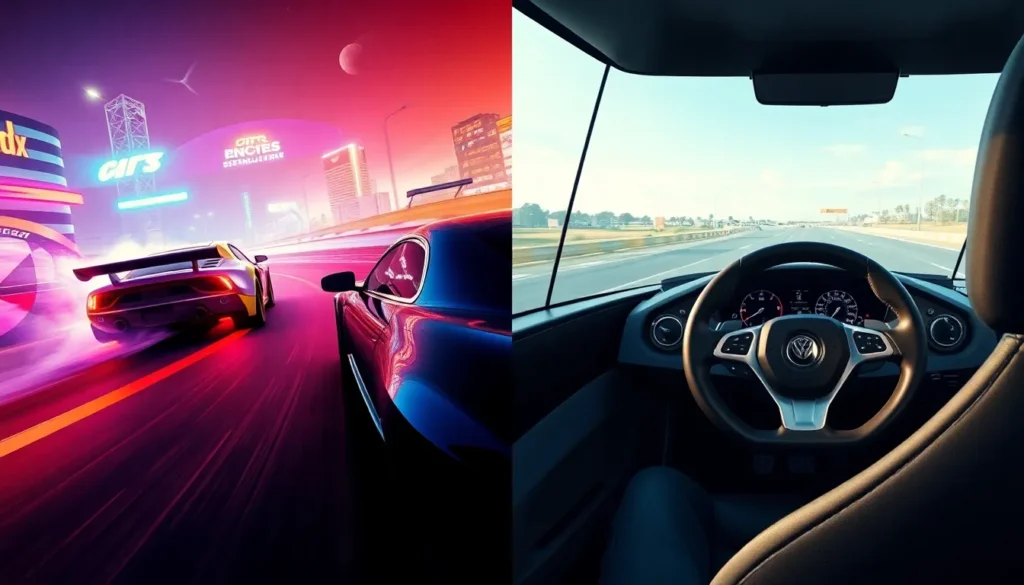

Racing games vs simulation games, it’s a debate that sparks strong opinions among players. Both genres put players behind the wheel, but they deliver fundamentally different experiences. Arcade racing games prioritize fun, speed, and accessibility. Simulation racing games focus on realism, precision, and authentic driving physics. Understanding these differences helps players choose the right type of racing game for their preferences and skill level. This guide breaks down what sets these two genres apart, compares their gameplay mechanics, and helps determine which style fits different types of players.
Table of Contents
ToggleKey Takeaways
- Racing games vs simulation games differ primarily in accessibility—arcade racers offer instant fun while simulations require practice to master.
- Arcade racing games feature simplified controls, power-ups, and forgiving physics that appeal to casual players seeking immediate entertainment.
- Simulation racing games use realistic physics engines that model tire grip, weight transfer, and vehicle damage for an authentic driving experience.
- Your choice between racing games vs simulation titles should depend on available time, interest in realism, and willingness to invest in specialized hardware.
- Racing wheels and pedals enhance simulation games but add $150–$1,000+ to your setup costs, while arcade racers play great with standard controllers.
- Hybrid games like Forza Motorsport let you toggle between arcade assists and simulation handling to experience both styles.
What Defines Arcade Racing Games
Arcade racing games prioritize entertainment over realism. These games feature exaggerated physics, forgiving controls, and fast-paced action that keeps players engaged from the first race.
The defining characteristic of arcade racing games is accessibility. Players can pick up a controller and start competing within minutes. There’s no steep learning curve or need to understand vehicle dynamics. Games like Need for Speed, Mario Kart, and Burnout exemplify this approach.
Key features of arcade racing games include:
- Simplified controls: Acceleration, braking, and steering respond instantly without requiring precise input timing
- Power-ups and boosts: Many arcade racers include nitro boosts, weapons, or special abilities
- Forgiving collision physics: Crashes rarely end a race, and vehicles recover quickly from impacts
- Exaggerated drift mechanics: Players can slide around corners at impossible angles
- Track variety: Courses often feature jumps, loops, shortcuts, and environmental hazards
Arcade racing games attract casual players and those seeking immediate gratification. Racing games vs simulation titles differ most significantly in this accessibility factor. A player doesn’t need hours of practice to feel competent in an arcade racer.
The visual presentation in arcade racing games often emphasizes spectacle. Explosions, dramatic crashes, and vibrant environments create an exciting atmosphere. Speed feels amplified through motion blur, camera shake, and audio design that heightens the sense of velocity.
What Makes Simulation Racing Games Unique
Simulation racing games recreate real-world driving physics with precision. These games model vehicle behavior based on actual automotive engineering principles.
Titles like iRacing, Assetto Corsa, and Gran Turismo represent the simulation racing genre. They attract players who want authentic driving experiences that mirror real motorsport.
Simulation racing games feature several distinct characteristics:
- Realistic physics engines: Tire grip, weight transfer, and aerodynamics affect vehicle handling
- Accurate vehicle models: Cars behave like their real-world counterparts with specific power curves and suspension characteristics
- Damage systems: Mechanical failures and collision damage impact performance realistically
- Weather and track conditions: Rain, temperature, and tire wear affect racing strategy
- Cockpit views: Many players use first-person perspectives with functional dashboards and mirrors
The learning curve for simulation racing games is significant. New players often struggle with proper braking points, throttle control, and racing lines. But, this challenge creates deep satisfaction when skills improve.
Simulation racing games reward patience and practice. Players who invest time learning vehicle dynamics gain competitive advantages. The racing games vs simulation debate often centers on this skill-based progression system.
Hardware plays an important role in simulation racing. Many dedicated players use racing wheels, pedals, and cockpit setups. These peripherals provide force feedback that communicates road conditions and vehicle behavior through physical sensation.
Gameplay and Physics Comparison
The physics systems in racing games vs simulation titles create dramatically different player experiences. Understanding these differences clarifies why each genre appeals to different audiences.
Control Response
Arcade racing games use input smoothing and assistance systems. Steering inputs translate directly to vehicle movement without delay. Simulation racing games model steering rack response, tire slip angles, and suspension geometry. Players must anticipate vehicle reactions rather than expecting instant response.
Braking Mechanics
Braking in arcade racers involves pressing a button to slow down. The vehicle stops predictably regardless of speed or surface conditions. Simulation racing games calculate braking force based on tire temperature, brake pad condition, weight distribution, and road surface. Lock-ups and ABS intervention become factors players must manage.
Cornering Physics
Arcade racing games allow dramatic slides and drifts that would be impossible in real vehicles. Players can maintain speed through corners with minimal skill. Simulation racing games punish incorrect corner entry speeds. Taking a turn too fast results in understeer or oversteer that requires correction.
Collision Consequences
Crashing in arcade racing games creates spectacular visuals but minimal gameplay impact. Players bounce off walls and continue racing. Simulation racing games model collision damage that affects steering alignment, suspension geometry, and engine performance. A single crash can end competitive hopes.
Speed Sensation
Arcade racing games emphasize perceived speed through visual effects. The actual velocity numbers matter less than the feeling of going fast. Simulation racing games present realistic speeds that initially feel slower. A 150 mph straightaway in a simulation title feels different than arcade representation of similar speeds.
The racing games vs simulation comparison reveals that neither approach is superior. They serve different purposes and satisfy different player motivations.
Which Style Is Right for You
Choosing between racing games vs simulation titles depends on personal preferences, available time, and gaming goals.
Choose arcade racing games if you:
- Want immediate fun without extensive practice
- Play racing games casually or with friends
- Prefer exciting visuals and dramatic moments
- Have limited gaming time
- Enjoy power-ups, weapons, or fantasy elements in racing
- Play primarily with a standard controller
Choose simulation racing games if you:
- Enjoy mastering complex systems
- Have interest in real motorsport and vehicle dynamics
- Want competitive online racing with skill-based matchmaking
- Plan to invest in racing peripherals like wheels and pedals
- Appreciate gradual improvement over time
- Seek authentic recreations of real tracks and vehicles
Many players enjoy both genres for different occasions. Arcade racing games work well for social gaming sessions. Simulation racing games provide deeper engagement for solo practice and competitive play.
Budget considerations also matter. Simulation racing games often require additional hardware investment for optimal experience. Racing wheels range from $150 to over $1,000. Arcade racing games play perfectly fine with standard controllers.
Some games blur the line between genres. Forza Motorsport and Gran Turismo offer adjustable difficulty settings that let players choose between arcade-style assists and simulation handling. These hybrid approaches let players experiment with both styles.