
Racing games tools have become critical for players who want to compete at higher levels. Whether someone races casually or joins organized leagues, the right software and accessories can make a real difference in lap times and consistency. From steering wheels to telemetry apps, these tools help players extract more performance from their virtual machines.
This guide covers the essential racing games tools every competitive player should know. It breaks down hardware options, software for car setup, data analysis programs, training utilities, and community platforms. Each category plays a specific role in building faster, more consistent drivers.
Table of Contents
ToggleKey Takeaways
- Racing games tools like quality wheels, load cell pedals, and sturdy cockpits form the foundation for competitive sim racing performance.
- Setup sharing platforms and overlay applications help players optimize car handling and make real-time adjustments during races.
- Telemetry tools such as MoTeC i2 Pro reveal exactly where you gain or lose time by analyzing steering, throttle, and brake inputs.
- Comparing your telemetry data with faster drivers accelerates improvement by providing clear performance targets.
- Community platforms like iRacing, Simgrid, and Discord connect players with skill-based competition and learning opportunities.
- VR headsets and structured practice sessions rank among the most valuable racing games tools for building consistency and immersion.
Simulation Hardware and Controllers
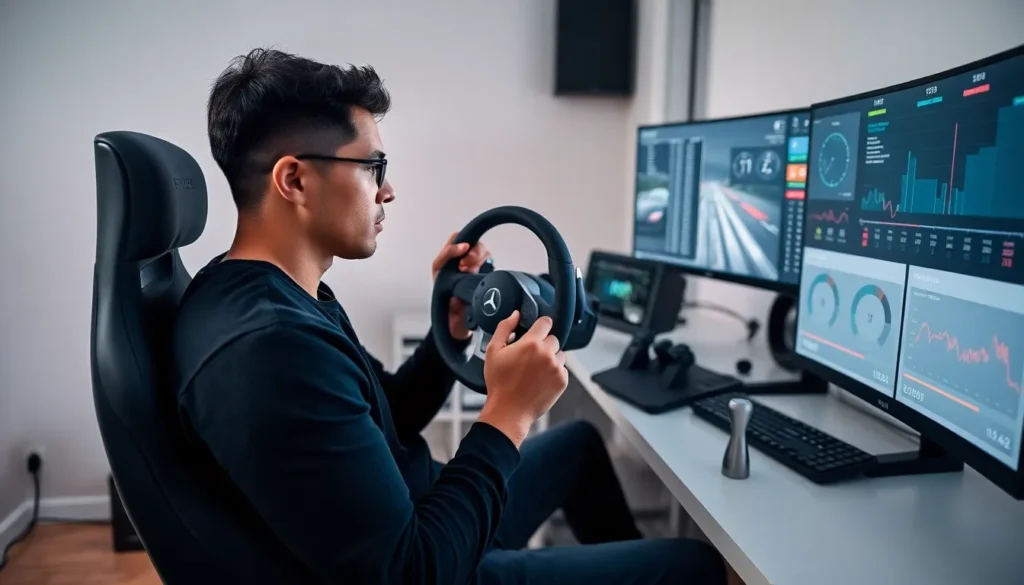
Hardware forms the foundation of any serious racing setup. The most important piece of equipment is a quality racing wheel. Entry-level wheels from Logitech, like the G923, offer force feedback and responsive controls at affordable prices. Mid-range options from Thrustmaster provide stronger motors and better build quality. High-end direct drive wheels from Fanatec and Moza deliver the most realistic force feedback available.
Pedals matter just as much as wheels. Load cell brake pedals give players precise control over braking pressure. This type of pedal measures actual force rather than position, which matches how real brake pedals work. Players who upgrade to load cell pedals often see immediate improvements in braking consistency.
Shifters add another layer of immersion. Sequential shifters work well for most racing games tools setups. H-pattern shifters suit players who prefer manual transmission simulation. Some racing games tools users also add handbrakes for rally and drift disciplines.
A sturdy cockpit or wheel stand keeps everything stable during intense racing. Folding stands work for casual players with limited space. Full cockpits with integrated seats provide the most stable platform for competitive racing. Rigs made from aluminum profile, like those from SimLab or Trak Racer, offer adjustability and strength.
Performance Tuning and Setup Software
Car setup determines how a vehicle handles on track. Many racing games tools include built-in setup options, but dedicated software makes the process faster and easier.
Setup sharing platforms let players download proven configurations for specific tracks and cars. Websites and apps store thousands of community-created setups. Players can find setups that match their driving style and hardware.
Some racing games tools include setup calculators. These programs help players understand how each adjustment affects car behavior. They explain the relationship between spring rates, damper settings, and tire pressures. This knowledge helps players create their own setups instead of relying entirely on downloads.
Overlay applications display real-time data during races. Players can see tire temperatures, fuel levels, and suspension travel without pausing. These racing games tools help drivers make adjustments on the fly during longer stints.
Third-party apps like Crew Chief act as virtual race engineers. They provide audio callouts about tire wear, fuel consumption, and gap times to other cars. This information helps players make strategic decisions during competitive events.
Telemetry and Data Analysis Tools
Telemetry tools record detailed data about every lap. They capture steering inputs, throttle and brake application, speed traces, and lap times. This data reveals exactly where a player gains or loses time.
Popular racing games tools for telemetry include programs like MoTeC i2 Pro, which works with several major racing simulators. These applications create visual graphs that show driver inputs alongside track position. Players can compare their fastest laps to slower ones and identify specific corners that need work.
Some games have built-in telemetry features. iRacing, Assetto Corsa Competizione, and rFactor 2 all export telemetry data in formats that external programs can read. This integration makes it easy to use professional-grade racing games tools.
Video analysis adds another dimension to data review. Players can sync telemetry graphs with replay footage. This combination shows exactly what happened on screen when a mistake occurred in the data. It helps connect the visual experience with the numbers.
Comparing telemetry with faster drivers accelerates improvement. Many leagues share telemetry files among members. Studying how top drivers handle specific corners provides clear targets for practice sessions.
Practice and Training Utilities
Consistent practice builds speed. Several racing games tools help players structure their training for maximum improvement.
Hot lap timers track personal bests and show delta times in real time. Players see whether they are ahead or behind their fastest lap at every point on track. This immediate feedback helps drivers identify which sections need attention.
Track guides and tutorials explain the fastest lines through each corner. Video content from experienced drivers shows proper technique. Some racing games tools overlay reference lines directly onto the game screen.
AI training modes let players race against computer opponents at adjustable difficulty levels. This practice builds racecraft skills like overtaking and defending. Players can increase AI difficulty as they improve.
VR headsets provide the most immersive practice environment. They give accurate depth perception and natural head movement for spotting apexes and other cars. Many serious racers consider VR among the most valuable racing games tools for training.
Scheduled practice sessions help players build consistency. Some apps track practice time and suggest focus areas based on performance data. They identify tracks and cars where a player struggles most.
Community and Multiplayer Platforms
Racing alone only goes so far. Community platforms connect players with organized competition and learning opportunities.
iRacing operates its own matchmaking system with skill-based ratings. Drivers earn safety ratings and iRating through official races. The system matches players against others of similar ability. This structure creates competitive racing at every skill level.
League management platforms organize private competitions. Simgrid, Low Fuel Motorsport, and similar services host leagues across multiple games. They handle registration, scheduling, and results tracking. These racing games tools make it easy to join organized series.
Discord servers bring communities together. Most major racing games have active Discord communities where players share setups, discuss strategy, and find teammates. These communities help new players learn faster through direct interaction with experienced racers.
Streaming platforms like Twitch showcase top-level racing. Watching skilled drivers helps players learn new techniques. Many streamers explain their thought process during races, which provides insight into decision-making.
Racing games tools for team communication matter in endurance events. Apps like Discord and TeamSpeak let teammates coordinate driver changes and strategy during long races. Clear communication often determines results in team events.