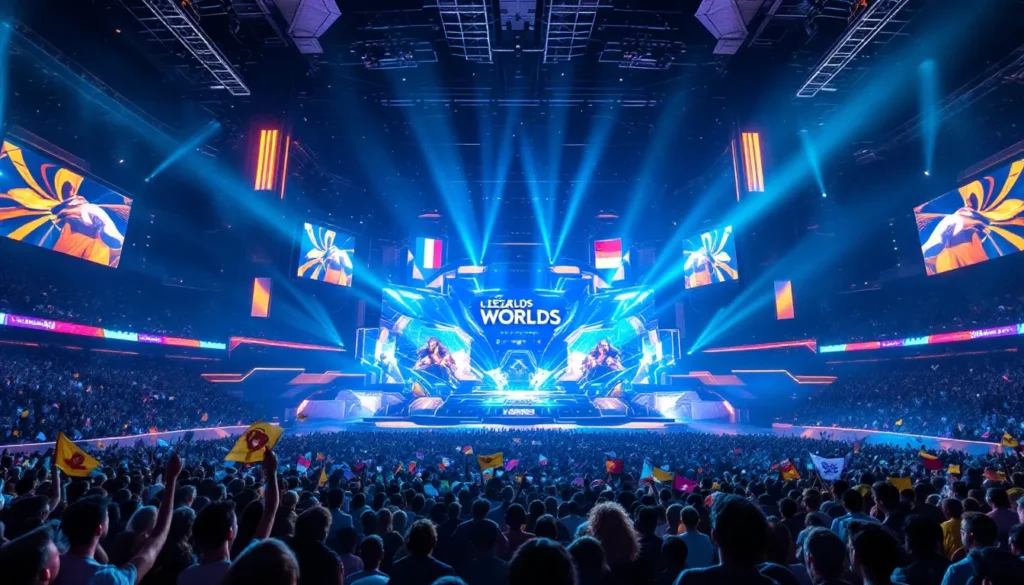

Every October, the global League of Legends community tunes in for Worlds, and it’s not just the gameplay that captivates millions. The opening ceremony, the anthem, the cinematic production, these moments define each championship. League of Legends Worlds songs have become as iconic as the tournaments themselves, transforming from simple opening music into cultural touchstones that rival traditional sports anthems. Whether it’s the chills from hearing “Legends Never Die” or the hype of a fresh championship theme, these tracks carry the weight of competition, artistry, and the dreams of players battling for glory. This guide breaks down the history, impact, and creative process behind every major Worlds song since 2011, giving you the context behind the anthems that have scored esports history.
Table of Contents
ToggleKey Takeaways
- League of Legends Worlds songs have evolved from simple opening music into cultural touchstones that define entire competitive seasons and rival traditional sports anthems.
- Iconic tracks like ‘Legends Never Die’ (2017) and ‘Warriors’ (2014) transcended gaming by combining emotional depth with mainstream appeal, introducing millions of non-gamers to League through artistic quality.
- Riot Games strategically selects artists months in advance, balancing competitive spirit, multi-platform performance, and novelty while maintaining legacy—resulting in songs that work as both esports anthems and standalone music.
- League of Legends Worlds songs create communal experiences and psychological anchors for pro players, uniting global communities around shared cultural moments rather than dividing them like game updates.
- Modern Worlds music (2019-present) demonstrates growing artistic ambition through genre experimentation, hip-hop integration, and in-universe projects like Heartsteel, proving esports deserves world-class production.
What Makes Worlds Songs So Special
Worlds songs aren’t just background music, they’re the heartbeat of League‘s biggest moment. What separates them from typical game soundtracks is the intentionality behind every note.
First, they’re crafted for a global audience. Riot Games doesn’t just create a track: they build a cultural moment. These songs play during opening ceremonies broadcast to millions across different time zones and continents. The music has to hit emotionally whether you’re watching in Seoul, Los Angeles, or São Paulo. That’s why many Worlds anthems incorporate layered instrumentation, building from orchestral foundations to explosive electronic drops, appealing to both traditional music lovers and esports fans craving energy.
Second, they capture the competitive spirit of that specific year. A Worlds song acts as a time capsule. When you hear a track, you instantly remember the region that won, the upsets that happened, the rising players who claimed their moment. “Rise” (2018) became synonymous with that year’s narrative, just as “K/DA” (2018) defined a cultural shift in how League presented its characters.
Third, featured artists matter more than you’d think. Riot collaborates with established names in hip-hop, rock, and electronic music, not for clout, but for authenticity. When Imagine Dragons performed “Warriors” (2014), they brought credibility that resonated beyond gaming circles. These collaborations signal to the mainstream music industry that esports moments are worth their time.
Finally, Worlds songs create communal experience. Standing in an arena with thousands of fans, or watching online with the global community, hearing that opening drop synchronizes everyone’s excitement. It’s the same reason crowds lose their minds at traditional sports anthems. The song becomes shorthand for “the biggest moment in League.”
The History of League of Legends Worlds Anthems
Early Years: Establishing the Tradition (2011-2014)
The first few Worlds ceremonies were modest compared to today’s productions. 2011 and 2012 didn’t have dedicated championship anthems, Worlds used existing League soundtrack pieces. The focus was on competition, not spectacle. But by 2013, things shifted. Riot began commissioning original music specifically for Worlds, understanding that these tournaments deserved their own sonic identity.
“Worlds Collide” (2013) marked the first dedicated opening theme, though it remained primarily orchestral. It set the tone without dominating the production. When Imagine Dragons arrived in 2014 with “Warriors,” everything changed. The track was unapologetically anthemic, with soaring vocals and a mainstream rock appeal that transcended gaming. Suddenly, players wanted Worlds songs on their playlists.
The Golden Era: Iconic Collaborations (2015-2018)
This four-year span produced some of the most beloved tracks in League history. The formula was clear: find respected artists outside gaming, trust them with the League vision, and create something that worked as both esports anthem and standalone music.
“Awaken” (2015) brought funk-influenced energy with Papaya and Malphite, shifting away from pure rock. “Burning Bright” (2016) leaned into pop-rock accessibility. But 2017 and 2018 represent the peak. “Legends Never Die” (2017) became the most recognizable Worlds anthem ever made, fans still sing it at esports events years later. The emotional buildup, the featured vocals from Against the Current, and the cinematic storytelling made it feel less like a game theme and more like a sports documentary score.
2018 gave us two major moments: “Rise” for the main Worlds theme and “K/DA Pop/Stars” for the K/DA event. The K/DA project, introducing League champions as a pop group, proved Riot could experiment with format while maintaining quality.
Modern Worlds Music: Evolution and Expansion (2019-Present)
Post-2018, Worlds songs became more diverse in style and ambition. “Phoenix” (2019) shifted back toward epic orchestration with Cailin Russo on vocals. “Giants” (2020) worked with Sting and Imagine Dragons, reuniting the legendary band with Worlds after their 2014 success.
The pandemic forced 2021 into a unique situation, with “Burn It Down” serving as a bridge between online competition and returning to in-person events. “Enemy” (2021, with Imagine Dragons and JID) proved that hip-hop integration was viable for Worlds.
Recent years (2022-2025) show Riot experimenting further. “Star” (2022), “Awaken, the Depths” (2023), and “Heartsteel” (2024) demonstrate confidence in trying different genres and artist combinations. The 2024 track, featuring the in-universe Heartsteel group, continued blending League’s fictional world with real music production.
Each era reflects not just musical trends, but League’s confidence and resources. Early Worlds songs proved the concept worked. The golden era turned it into an art form. Modern Worlds music treats it as an ongoing evolution, less about finding the “perfect formula” and more about authenticity and surprising the audience.
Notable Worlds Songs and Their Cultural Impact
Breakthrough Anthems That Defined Eras
“Warriors” (2014, Imagine Dragons) is the obvious starting point. It didn’t just work as a Worlds theme, it became a global hit. The track introduced millions of non-gamers to League of Legends through mainstream radio rotation. Its impact shaped how Riot approached Worlds music forever. Every year since, they’ve chased that blend of gaming credibility and mainstream appeal.
“Legends Never Die” (2017) might be the greatest achievement in Worlds music history. It’s technically perfect: the orchestral foundation builds methodically, the featured vocals from Against the Current carry emotional weight, and the drop lands exactly when you need it. More importantly, it captures a feeling. When players watch that cinematic, with flashbacks to legendary moments across multiple Worlds, they feel the history of the game. It’s why fans still get goosebumps watching the 2017 ceremony years later.
“Rise” (2018) took a different approach. Instead of using a major mainstream artist, Riot collaborated with Glitch Mob, bringing EDM credibility. The result was darker, more aggressive, and perfectly suited that year’s narrative. It proved you didn’t need a household name to create an iconic anthem.
“Enemy” (2021, Imagine Dragons & JID) marked a shift toward hip-hop integration. JID’s rapid-fire verses over atmospheric production created contrast that shouldn’t have worked but absolutely did. It showed Worlds music was willing to blend genres and elevate multiple artists rather than centering on one big name.
Collaboration Highlights and Featured Artists
The most successful Worlds songs share one trait: they match artist to moment. Imagine Dragons appeared three times (2014, 2020, 2021) because they understood the tone Worlds demanded. Against the Current (featured in 2017) brought perfect vocal presence without overshadowing the production.
“Awaken, the Depths” (2023) brought lesser-known artists like Denzel Curry and Sting into Worlds conversation. Denzel Curry’s inclusion was particularly smart, his reputation in hip-hop lent credibility that mainstream pop artists couldn’t offer. Sting, a rock legend, showed Riot could recruit from multiple musical generations.
What’s interesting about recent Worlds music is the willingness to feature League’s own characters as artists. The Heartsteel project (2024) created an in-universe band and produced actual music. It’s a layer of meta that separates League from traditional esports. You’re not just watching champions compete, you’re watching fictional musicians perform for real global audiences.
The Creative Process Behind Worlds Music
How Riot Games Selects and Produces Worlds Songs
Riot’s process starts months before the actual Worlds tournament. The selection happens around spring or early summer, giving artists and producers four to five months to work. This timeline allows for quality control while maintaining surprise value.
The selection criteria balance several factors. First, does the artist fit the competitive spirit of that year? If 2025 has a particular story, maybe an underdog region rising, or a specific playstyle dominating, Riot wants artists who can capture that narrative. Second, how does the track perform on multiple mediums? It needs to work in a stadium ceremony, over Twitch streams, on Spotify, and in TikTok clips. A song that only works in one context isn’t a Worlds anthem.
Third consideration is novelty without alienation. Riot experiments, bringing in JID in 2021 was a risk because hip-hop integration wasn’t guaranteed to work at Worlds. But the risk paid off. Conversely, they won’t experiment so much that longtime fans feel disconnected. You’re trying to make the new song feel like it belongs in the Worlds legacy without being derivative of past songs.
Once an artist is selected, collaboration begins in earnest. Riot provides creative direction: the year’s tournament location, the overall aesthetic Worlds is going for, cinematic ideas. But they trust artists to interpret the brief rather than micromanage. Imagine Dragons wasn’t told exactly what to write, they were given context and asked to channel it into music their way.
Production quality is non-negotiable. Worlds songs get the budget of a major label release. You’re hearing studio-grade recording, professional mixing, and sometimes orchestral recording sessions. The final track goes through multiple versions before release. “Legends Never Die” wasn’t finalized until mere weeks before Worlds, refinements happened all the way through.
Musical Direction and Thematic Elements
Listen to Worlds songs chronologically and you’ll notice thematic progression. Early tracks (2011-2014) emphasized competition and triumph, “Warriors” is the clearest example, with lyrics about facing opponents and overcoming doubt. The 2015-2018 period expanded this to include legacy and history. “Legends Never Die” directly addresses what it means to be remembered.
Recent years have tilted toward existential and emotional themes. “Enemy” (2021) deals with conflict and self-doubt. “Awaken, the Depths” (2023) carries mystery and discovery. This shift reflects League’s maturing audience and the esports industry’s growing artistic ambitions.
Musically, you can track production trends. The orchestral emphasis of early Worlds has softened in favor of hybrid approaches. Modern Worlds songs start with orchestra but layer in electronic elements, hip-hop beats, or rock guitars depending on the theme. It’s less about rigid genre and more about sonic storytelling.
One constant: the build. Every Worlds song follows a narrative arc. Quiet introduction, gradual layering of instruments and vocals, building tension, then the drop or climax. This structure mirrors the tournament itself, starting with play-ins and group stage, building through knockout rounds, exploding at finals. The song structure mirrors the tournament bracket.
Where to Listen and Watch Worlds Songs
Finding Worlds songs is straightforward. Every championship anthem releases across all major streaming platforms simultaneously, Spotify, Apple Music, YouTube Music, Amazon Music. They typically drop a week or two before the tournament, giving the community time to obsess over lyrics and production choices.
YouTube is your best source for the official experience. Riot’s League of Legends YouTube channel posts the full cinematic alongside the song. This is critical because Worlds songs aren’t just audio, they’re audiovisual experiences. Watching “Legends Never Die” with the cinematic showing legendary moments across League history is fundamentally different from hearing it on Spotify. The cinematics provide context and emotional resonance.
For live performances, LoL Esports covers all major tournament events, including opening ceremonies where songs debut. If you’re watching Worlds live, whether in arena or streaming, the opening ceremony is non-negotiable viewing. That’s where the song hits hardest.
Social media is where Worlds songs gain secondary life. TikTok clips of the opening ceremony get millions of views. Twitter threads dissecting lyrics emerge within hours. Reddit communities dedicated to League discuss production choices, compare songs across years, and debate rankings. If you want to join these conversations, being familiar with recent tracks is essential.
For a deep jump into League lore and world-building connected to Worlds music, the official League of Legends community offers context on how champions tie into annual themes. Some Worlds songs connect directly to champion narratives or story events happening in League’s universe.
One pro tip: Worlds songs often reappear in League’s official trailers, cinematics, and esports broadcasts throughout the year. Hearing “Legends Never Die” pop up in a random promotional video hits differently when you understand its historical weight. Keep these songs in your rotation, they age remarkably well.
Why Worlds Songs Matter to the Gaming Community
Worlds songs transcend gaming because they represent something fundamental about competitive culture. They’re the rallying cry before the biggest battle. In traditional sports, you have national anthems and fight songs, emotional anchors for teams and fans. Esports has fewer of these traditions because it’s younger. League of Legends Worlds songs fill that gap. They’re the closest thing esports has to legendary sports moments.
For competitive players, a Worlds song becomes a psychological anchor. Pro players watch opening ceremonies before matches. When they hear the anthem, it’s a signal: this is it, this is the moment your preparation meets reality. Rookies and veterans alike describe the emotional lift from hearing the song live in the arena. It’s not placebo, the power of ritual and music in performance is well-documented. NME Gaming has covered how esports anthems function similarly to traditional sports psychology.
For casual fans, Worlds songs are entry points to League’s world. Someone might not play League, might not understand the meta, but hearing “Warriors” or “Legends Never Die” creates intrigue. “What is this game? Why does it have such incredible production?” Worlds songs have introduced millions to League of Legends through pure artistic quality.
Community identity forms around these songs. Fans learn lyrics, remix them, create fan art, debate which years had the best music. It’s participatory culture. Unlike patches or balance changes, which divide the community into winners and losers, Worlds songs unite everyone. A “Legends Never Die” fan and a “Rise” fan both acknowledge both songs slap, it’s not either/or.
For the broader esports industry, Worlds songs legitimized esports as an artistic medium. When Dot Esports covers Worlds music, it’s not covering “game music”, it’s covering music for a major global event. This credibility matters. It signals that esports moments deserve world-class production and serious artistic investment. The success of League’s Worlds songs inspired other games to elevate their esports presentation.
Most importantly, Worlds songs create memory. Years from now, when someone asks “What was esports like in 2024?” or “What defined Worlds when you started playing?” you’ll have a song as your answer. You’ll remember exactly where you were when you first heard it. That’s the power Riot tapped into. They didn’t just create theme songs, they created memories.
Conclusion
League of Legends Worlds songs have evolved from simple opening music into essential moments that define entire competitive seasons. They represent the intersection of artistic ambition and competitive culture, where gaming meets mainstream music, where esports ceremony matches traditional sports pageantry, and where global communities unite around shared cultural moments.
The journey from “Legends Never Die” and “Warriors” to experimental projects like Heartsteel shows an industry confident enough to evolve while respecting its legacy. Each year brings new artists, new production approaches, and new stories told through music. That’s the real power of Worlds songs: they’re never finished. They keep changing, surprising, and mattering because the competition keeps mattering.
The next Worlds anthem will hit differently for everyone. For some, it’ll become their favorite track ever. For others, it’ll feel like it doesn’t compare to the golden era. For the competitive players, it’ll become the soundtrack to their greatest achievement or their most crushing defeat. That’s exactly how it should be. Worlds songs aren’t meant to be universally perfect, they’re meant to resonate personally because they’re tied to moments that genuinely count.