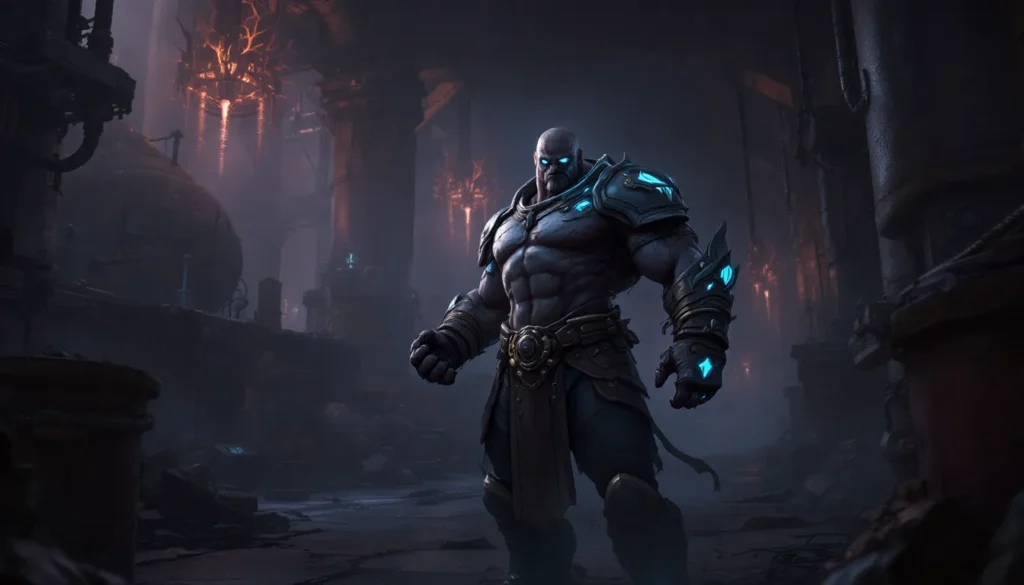

Vander stands as one of League of Legends’ most compelling characters, a bruiser from Zaun whose story extends far beyond the Rift. Introduced through the Arcane animated series, he’s captured the imagination of both casual players and competitive enthusiasts alike. His unique kit combines defensive utility with explosive damage potential, making him a crucial pick for teams looking to control teamfights. Understanding Vander’s mechanics, lore, and strategic applications is essential for anyone serious about mastering the champion, whether you’re grinding ranked or diving deep into Runeterra’s most complex characters.
Table of Contents
ToggleKey Takeaways
- League of Legends’ Vander is a bruiser champion from Zaun whose crowd control reduction passive scales with defensive stats, enabling both tankiness and utility in teamfights.
- Vander’s weak early game (levels 1-5) transforms dramatically at level 6 with his ultimate, making patient scaling and survival the core strategy until mid-game power spikes arrive.
- Core itemization for Vander prioritizes defensive items with haste and utility (Hollow Radiance, Spirit Visage) over raw damage, since his synergies reward defensive stat combinations exponentially.
- The Arcane animated series gave Vander profound character depth, transforming him from a mechanic-driven champion into an emotionally resonant character whose relationships define his narrative significance.
- Vander excels in extended grouped teamfights where crowd control chains and ultimate positioning can catch multiple enemies, but struggles against burst-heavy champions and early-game poke damage.
- Mastering Vander requires exceptional map awareness, crowd control timing, itemization discipline, and mental acceptance that wins come through enabling teammates rather than individual outplays.
Who Is Vander In League Of Legends?
Vander is a top-lane bruiser-turned-support champion from Zaun, known for his unmatched loyalty and devastating combat abilities. He operates as a vanguard character, designed to absorb punishment while enabling his team through crowd control and zone control. His role in League of Legends has evolved significantly since his introduction, moving from primarily top-lane play into a more flexible position that thrives in dynamic team environments.
As a character, Vander embodies the working-class spirit of Zaun, hardened by the streets, determined to protect those he cares about, and capable of immense violence when pushed. His presence on the Rift is imposing: his animations convey raw power, and his voice lines carry the gravitas of someone who’s seen too much. Players who main Vander tend to embrace the champion’s protective playstyle, preferring to absorb damage and enable teammates rather than chase personal glory.
What makes Vander distinctive in the current meta is his hybrid damage type and crowd control profile. Unlike pure tanks that rely solely on armor stacking, Vander balances survivability with utility, giving teams more flexibility in itemization and strategy.
Vander’s Origin And Background Story
Vander’s story is rooted in the underbelly of Zaun, where survival often means choosing between right and wrong, or in his case, between family and principle. Before his transformation, he was a man of modest means, working whatever jobs kept food on the table and a roof over his gang’s heads. His friendship with Marcus and his protective relationship with Powder shaped everything about who he became, and those bonds defined his trajectory through Zaun’s chaotic hierarchy.
His rise from street orphan to one of Zaun’s most respected (and feared) figures wasn’t accidental. Vander earned his position through cunning, brutal efficiency, and an unwavering commitment to those under his protection. The chemtech enhancements he underwent further amplified his natural abilities, transforming him into something more than human, a walking arsenal capable of shaping conflicts across the undercity.
What’s crucial to understand is that Vander’s strength never came from Chemtech alone. His true power emerged from his conviction. He believed in building something better for Zaun, even when every system was designed to keep the undercity crushed beneath Piltover’s heel. That idealism, paired with ruthless pragmatism, is what made him legendary.
Arcane’s Impact On Vander’s Character Development
Arcane fundamentally reshaped how League of Legends players understood Vander. The Netflix series didn’t just add lore, it provided psychological depth that the champion’s base interactions couldn’t convey. Before Arcane, Vander was a cool champion with a compelling design. After Arcane, he became a character that players actually grieved over.
The show demonstrated why Vander matters: his relationships with Powder, Mylo, Claggor, and Marcus weren’t afterthoughts to his story, they were the entire point. His desire to protect them, his willingness to make impossible choices, and his ultimate tragedy transformed him from a simple “tough guy” into something genuinely tragic. That emotional weight carries into League of Legends gameplay: players feel the weight of his abilities, understand why he throws himself into harm’s way.
Arcane also clarified the chemtech augmentations that define Vander’s combat effectiveness. The series showed the physical toll of those enhancements, making his in-game tankiness feel earned rather than arbitrary. When you play Vander, you’re not just piloting a strong champion, you’re embodying a character whose very existence is a statement about survival and sacrifice in a world that values neither.
Vander’s Powers And Abilities Explained
Vander’s kit revolves around two core mechanics: Crowd Control Reduction and Chemtech Damage. These elements work in concert to make him exceptionally difficult to lock down while dealing consistent, scaling damage throughout the game.
Passive – Unstoppable Force: Vander’s passive provides him with permanent crowd control reduction that scales with his armor and magic resist. This makes him naturally resistant to kiting and provides significant value even in early game fights. Every point of armor or magic resist translates directly into crowd control reduction, incentivizing typical tanky itemization while rewarding defensive statistics in ways other champions don’t experience.
Q – Chem Blast: His primary damage and harass tool, Chem Blast throws a projectile that detonates on impact, dealing physical damage in an area. The ability reduces cooldown when it hits enemies, making it crucial for sustained damage and poke trading in lane. Against grouped enemies, repeated Chem Blast casts can quickly build up damage numbers.
W – Armored Frame: This ability grants Vander a shield based on his maximum health, making it a scaling defensive tool that rewards investing in health items. The shield duration is long enough to provide meaningful protection through sustained fights, and the cooldown is short enough for it to be used multiple times during extended teamfights.
E – Chemical Slam: Vander’s crowd control tool and gap closer. He charges forward, knocking up enemies in his path. The knockup duration scales with his crowd control reduction items, meaning items that make him tankier also make his crowd control more effective. This creates unique itemization incentives that don’t exist on other champions.
R – Undercity Collapse: His ultimate ability calls down Chemtech explosions around a target area, dealing damage and applying crowd control. The ability has significant range and can catch entire teams off-guard during teamfights. The damage scales with ability power, making hybrid builds viable even though Vander functions primarily as a bruiser.
The interaction between his passive and his abilities creates a unique dynamic: items that grant both defensive statistics and utility (like Hollow Radiance or Spirit Visage) provide exponentially more value on Vander than they would on most other champions. Understanding this synergy is key to optimizing his builds.
How To Play Vander In League Of Legends
Playing Vander effectively requires understanding his role as a setup champion, he’s not designed to delete enemies single-handedly but to create opportunities for his team. Whether in top lane or support, his playstyle centers on controlling teamfight areas, soaking damage, and enabling carries.
Vander thrives in extended teamfights where his crowd control reduction stacks up and his ability to chain crowd control abilities becomes invaluable. He struggles against burst-heavy champions and compositions that can quickly eliminate him before he reaches enemies. Positioning is hence crucial: Vander needs to enter fights at the right moment, not first, but early enough to land his abilities before retreating for cooldown resets.
In lane, Vander’s early game is relatively weak. He lacks the damage of dedicated damage dealers and the peel of pure supports. But, by level 6, his ultimate presence transforms him into a threat that forces opponents to respect his all-in potential. Many top-laners and supports underestimate Vander’s engagement range, making mistakes that allow him to create early kills.
Best Items And Build Paths For Vander
Vander’s itemization is more flexible than most bruisers because his synergies reward specific stat combinations. Core items typically include:
Hollowed Radiance – Provides armor, magic resist, and haste (crowd control reduction), making it exceptionally efficient on Vander. The mana helps with ability spam, and the aura affects nearby enemies, adding utility to basic tanking.
Spirit Visage – Similar to Hollowed Radiance, it provides magic resist, health, and haste. The healing amplification is less directly useful on Vander than on healing-dependent champions, but the haste makes the item efficient.
Kaenic Rookern – If facing heavy ability power damage, Kaenic Rookern provides magic resist, haste, and the ability to apply grievous wounds to enemies hitting you. This turns you into an excellent answer to healing-heavy enemy teams.
Adaptive Force Items – Items like Chempunk Chainsword or Abyssal Mask provide both defensive and utility value. The grievous wounds from Chainsword is crucial against healing-reliant enemies, while Mask’s aura reduces enemy magic damage to nearby allies.
Boot Choices:
- Plated Steelcaps against heavy physical damage threats
- Mercury’s Treads against crowd control-heavy compositions
- Mobility Boots for top lane positioning
Vander doesn’t build traditional damage items like Trinity Force or Sunfire, though hybrid builds can work in specific matchups. The philosophy is defensive statistics plus utility outvalue raw damage scaling.
Optimal Rune Selections And Summoner Spells
Rune selection depends on Vander’s lane position and the enemy composition. The two primary keystones are:
Aftershock – The traditional choice for vanguard champions. Aftershock provides armor and magic resist after using crowd control, amplifying Vander’s tankiness when engaging. The bonus damage from Aftershock helps with early harassment, making it strong for lane bullying.
Grasp of the Undying – Preferred in longer lane matchups where Vander needs sustain and consistent damage. The health scaling pairs perfectly with Vander’s passive crowd control reduction, creating a multiplicative efficiency.
Secondary rune trees are typically:
- Resolve (conditioning, second wind, or bone plating depending on lane matchups)
- Inspiration (for stop watch access and biscuits in harder matchups)
Summoner spell selection varies by position:
- Top Lane: Flash + Teleport
- Support: Flash + Ignite (for kill pressure) or Flash + Exhaust (for defensive utility)
Flash is non-negotiable on Vander: it’s his primary engagement and escape tool.
Vander’s Role In Team Composition And Meta
Vander functions best in team compositions that leverage his crowd control and durability. He pairs excellently with champions that deal consistent damage from safe distances, ADCs like Caitlyn, Jinx, or Kog’Maw benefit tremendously from Vander’s initiation and zone control.
The current meta (early 2026) has shifted toward faster-paced games with increased emphasis on early skirmishes. Vander’s late-game teamfight value remains exceptional, but his weak early game means teams must manage leads carefully. Teams with Vander do best when they avoid unnecessary skirmishes before level 6 and scale into the mid-game where his ultimate becomes a genuine game-changer.
As a bruiser, Vander competes in a loaded meta. Champions like Ornn, Sion, and Malphite offer different value propositions, Ornn provides team buffs, Sion offers unmatched AoE damage, and Malphite delivers instant initiation. Vander’s advantage lies in his flexibility and crowd control reduction, which allow him to adapt to enemy strategies better than pure role-specialists.
Vander also functions in support, where he’s particularly strong in bot lane vs. dive-heavy junglers. His ultimate gives bot lane substantial kill pressure, and his crowd control chains with ADC abilities for consistent teamfight value. Support Vander struggles against long-range poke, making item priority crucial.
Matchups And Counter Picks
Favorable Matchups:
- vs. Garen: Vander’s crowd control reduction makes him immune to Garen’s biggest threat (his silence duration is minimized). He can all-in Garen safely once hitting level 6.
- vs. Sion: While Sion deals more raw damage, Vander’s crowd control chain prevents Sion from fully utilizing his ultimate.
- vs. Urgot: Urgot lacks the sustained damage to out-damage Vander’s tankiness, making longer fights increasingly favorable for Vander.
Difficult Matchups:
- vs. Jayce: Early game poke from Jayce punishes Vander’s weak early laning. Jayce’s ranged form maintains distance while Vander struggles to respond.
- vs. Teemo: Blind from Teemo’s darts completely negates Vander’s ability to trade effectively. The matchup is incredibly frustrating and potentially unwinnable.
- vs. Fiora: Fiora’s true damage and parry ability specifically counter bruisers like Vander. Her dueling is superior, and she can extend fights past Vander’s crowd control usefulness.
When facing Fiora, prioritize crowd control chains, avoid unnecessarily extending fights, and consider requesting jungle assistance. Against Jayce, consider early defensive itemization over standard builds and roam mid once ult becomes available. These matchups aren’t completely unwinnable but require adaptation.
Early Game Strategy And Laning Phase
Vander’s early game strategy revolves around survival and mana management. His Q ability consumes mana rapidly, and without sufficient mana regeneration, he’ll be forced out of lane by mana starvation even though having full health. Prioritize Corrupting Potion if facing aggressive poke matchups: the mana regeneration is worth more than pure durability.
In the level 1-5 window, Vander isn’t a lane bully. His damage is minimal, and his tankiness hasn’t scaled sufficiently to absorb enemy poke. Play safe, farm defensively, and look for Chem Blast poke opportunities when enemies overextend. Against champions with early kill pressure, consider buying an early negatron cloak or spectre’s cowl if facing heavy magic damage.
Leveling priority depends on matchup. Against AD-heavy threats, prioritize E for the knockup duration (which improves with haste), giving you more setup for followup crowd control. Against all-in bruisers, max Q for consistent damage output. Most high-level Vander players level Q to unlock rank 2 at level 8, providing substantial cooldown reduction for poke spam.
Minion priority becomes crucial at level 4-5. Missing too many minions while playing safely will leave you 20+ CS down by 10 minutes, making it nearly impossible to scale into relevance. Use Chem Blast to last-hit minions when enemies aren’t positioned to punish, and accept some trading damage if it means securing dying minions.
Mid-Game And Late-Game Positioning
Once you hit 6, the game fundamentally changes. Your ultimate presence transforms you from a weak laner into a legitimate threat. The mid-game (10-20 minutes) is where Vander transitions from surviving to controlling.
Positioning during mid-game fights differs by role. In top lane, position yourself as a secondary frontline, not the first into fights, but close enough to chain crowd control quickly if enemies engage on your team. Let your primary tank (if one exists) absorb initial burst, then follow up with your crowd control. In support, you’re responsible for initiating advantageous fights: position around enemy ADC and look for ultimate engages when enemies are grouped.
Late-game Vander (25+ minutes) becomes an initiator. Your tankiness has peaked, your haste provides significant crowd control reduction, and your abilities chain together for massive utility. In teamfights, the goal is reaching enemy damage dealers while maintaining crowd control pressure. Avoid splitting unless your team has a scaling ace who can 1v1 threats: Vander thrives in grouped fights where his ultimate and crowd control chain create space.
Positioning into the late game becomes increasingly about timing. Teams with Vander do best when avoiding unnecessary poke trades and grouping for critical objective fights (Baron, Elder, inhibitor nexus). A single decisive teamfight can swing entire games when Vander’s ultimate catches multiple enemies.
During League of Legends strategies, understanding when to engage versus when to hold back is crucial. Vander excels in fights where he can guarantee ultimate usage: a wasted ultimate is potentially a lost fight. Playing patiently in late-game is the mark of experienced Vander players.
Vander’s Lore And Connection To Other Champions
Vander’s lore transcends his mechanics: it’s the narrative glue connecting Zaun’s most important stories. His choices echo through the undercity, influencing characters from Powder (now Jinx) to Marcus to even Zaun’s broader political landscape. Understanding these connections enriches the champion experience and gives context to interactions that might otherwise seem random.
Vander represents the working-class solution to systemic oppression. He didn’t have resources Piltover-adjacent characters possess, yet he built something worth dying for. His choices defined what Zaun could become, not as a conquered territory of Piltover, but as a place where undercity residents could build independent power structures.
Relationship With Mylo, Claggor, And Powder
Mylo and Claggor represent Vander’s found family before everything fell apart. These weren’t biological brothers but chosen ones, kids pulled from the streets and given purpose under Vander’s leadership. Mylo’s cautious pragmatism and Claggor’s straightforward loyalty created the ideal gang dynamic, and Vander cultivated both while maintaining the respect hierarchy necessary for survival.
Powder’s relationship with Vander is the emotional core of his character. She was an orphan he protected, a child he loved, someone he’d sacrifice everything for without hesitation. Yet his protection wasn’t foolish, he was grooming her to survive Zaun’s brutality. The tragedy isn’t that he failed her: it’s that he succeeded too well, teaching her to become someone capable of surviving his death, someone whose survival would destroy everything he built.
Arcane devastated this relationship. The show portrayed Vander’s death not as a clean exit but as the catalyst for Powder’s transformation into Jinx. His absence didn’t allow her to grow: it allowed her trauma to fester and evolve. When Vander appears in League of Legends, that context haunts every interaction. League of Legends tips often mention thematic champion picks, but Vander’s thematic depth goes beyond mechanics, he’s a character shaped by impossible choices.
The Firelights Connection And Zaun Politics
Vander’s legacy extends to the Firelights, Zaun’s resistance movement against chemtech exploitation. While Vander himself predates organized Firelights resistance, his philosophy of protecting undercity residents from external exploitation directly influences their ideology. Characters like Ekko carry forward Vander’s protective instinct, applying it to entire communities rather than individual gangs.
Zaun’s political landscape in recent lore shifts toward organized resistance against Piltover and chemtech corporations. Vander understood this necessity before it became mainstream, he recognized that individual gang dominance was insufficient protection against systemic threats. The Firelights represent the evolution of his vision: collective strength replacing isolated gang warfare.
Vander also intersects with Viktor and Powder’s divergent paths. Viktor represents technological transcendence, the belief that chemtech augmentation is the solution to Zaun’s problems. Vander and, later, Ekko represent human-centered solutions, protecting the undercity through solidarity and loyalty rather than superhuman enhancement. The philosophical divide between these approaches defines modern Zaun’s conflict.
For players interested in deeper lore exploration, League of Legends guide resources provide additional context on champion relationships and regional stories. Vander’s narrative connects to nearly every major Zaun story, making him essential to understanding the region’s political development.
Tips For Mastering Vander As A Main
Mastering Vander requires patience and a willingness to accept weak early games in exchange for mid to late-game dominance. This mindset separates casual Vander players from dedicated mains. You’re not trying to hard-carry games through individual outplays: you’re orchestrating teamfights where crowd control chains win fights.
First, develop exceptional map awareness. Vander’s value increases dramatically when he can rotate to objectives before enemies anticipate his arrival. A mid-lane Vander teleport or support Vander roam to bot lane can swing entire skirmishes. Many newer Vander players make the mistake of tunnel-visioning on their lane, missing opportunities to impact other areas of the map.
Second, practice crowd control timing. Vander’s E (knockup) into R (AoE crowd control) creates situations where enemies can’t retaliate effectively. Learning to chain these abilities to maximize crowd control application separates adequate Vander players from exceptional ones. Record your games and review crowd control chains, identify moments where better timing could have converted losses into victories.
Third, understand item spikes. Vander has defined power windows depending on itemization. Once you complete your first major item (typically Hollowed Radiance), your tankiness increases significantly. Most good Vander players time their aggressive play around item completion, avoiding unnecessary fights during early components while becoming increasingly dangerous once items finish.
Common Mistakes And How To Avoid Them
Engaging Too Early: Vander players frequently attempt early engagement before hitting level 6 or before sufficient items are completed. This invariably results in feeding enemies early advantages. Discipline yourself to play passively until your power spikes align with objective timings.
Misusing Ultimate Cooldown: Vander’s ultimate has a significant cooldown early game. Wasting it on low-value targets or using it to finish kills rather than initiate fights removes your primary teamfight tool. Treat your ultimate as a precious resource reserved for high-impact moments.
Poor Itemization: Building purely for damage on Vander reduces his effectiveness. The champion’s synergies reward defensive items with utility over pure resistances. A Hollowed Radiance is more valuable on Vander than a raw armor item because the haste provides additional crowd control reduction.
Positional Errors: Vander should never be positioned where enemies can safely ignore him. He’s designed to be engaged with: if enemies can walk around you, you’ve positioned incorrectly. Adjust positioning to force enemies into interactions with your crowd control.
Mana Mismanagement: Early game mana starvation is real. If you’re constantly out of mana unable to participate in fights, your build is incorrect. Add mana regeneration sources, reduce Q spam, or prioritize biscuits in your rune page. Mana efficiency is underrated on Vander.
Resource management separates respectable Vander players from ones who consistently climb. When reviewing your replays, focus on these specific mistakes. Fixing just one of these issues dramatically improves win rates.
Vander In Competitive Play And Esports
Vander’s presence in professional League of Legends has fluctuated based on meta shifts and balance changes. When tank engage supports gain meta priority, Vander sees increased play. When utility-focused picks dominate, he disappears from competitive rosters. Understanding these patterns helps predict future Vander viability.
Historically, Vander has appeared in World Championship and regional playoff matches primarily as a flex pick. Teams pick him into specific compositions where his ultimate crowd control coverage is valuable, or into enemy draft patterns where he presents sustainable frontline value without requiring hypercarry attention.
Competitive Vander play differs from solo queue fundamentally. Professional players use his early weakness strategically, positioning their teams defensively and scaling into winning teamfights. Junglers camp for Vander’s lane priority, securing resource allocation that guarantees his itemization timing. This coordinated approach transforms Vander’s early weakness into intentional scaling strategy.
At professional levels, Vander itemization is more standardized than solo queue builds. Teams prioritize CDR (crowd control reduction) through haste, favor utility items that enable their compositions, and avoid experimental builds. Professional Vander gameplay emphasizes ultimate precision, fights are decided by whether Vander’s ultimate catches the right enemies at the right moment.
Recent competitive appearances show Vander performing particularly well in tanky-composition heavy metas where multiple engage tools create chaotic teamfights. When the meta demands fast-paced objective trading, his weaker early game becomes a liability that teams avoid.
For those interested in competitive meta analysis, LoL Esports provides comprehensive coverage of professional play. Following professional Vander usage helps solo queue players understand when he’s likely to be strong and what itemization professionals prioritize in different matchups.
Future Prospects And Potential Updates
Vander’s future balance exists at an intersection between his mechanical complexity and his iconic status post-Arcane. Riot has consistently avoided gutting Vander even though his frustration potential because his lore significance supersedes pure mechanical balance considerations.
Likely balance directions for Vander involve fine-tuning his power curves rather than reworking. The champion’s basic identity (crowd control reduction scaling with defensive stats) is healthy long-term. What Riot will probably adjust is his early game effectiveness or his ultimate’s crowd control application, subtle changes that maintain his identity while preventing overpowering bursts of strength.
Arcane’s cultural impact has genuinely influenced how Riot approaches Vander updates. They’re unlikely to carry out changes that feel inconsistent with his character portrayal, making Vander one of the few champions whose balance philosophy explicitly includes narrative considerations.
Expect Vander to remain relevant through 2026 and beyond, particularly if Arcane’s second season reignites mainstream interest in his character. His mechanical niche (defensive stat scaling with crowd control reduction) fills a specific role unlikely to be completely powercrept. As long as crowd control-heavy teamfight compositions exist in League of Legends, Vander will have value.
For players tracking potential changes, Game8’s tier lists and Mobalytics’ patch analysis provide comprehensive meta tracking. Both resources predict which champions will increase in value as metas shift, helping players decide whether investing Vander mastery is worthwhile long-term.
Players interested in additional League of Legends examples of champion interactions and strategic applications will find that Vander frequently appears in discussions of crowd control synergies and teamfight orchestration.
Conclusion
Vander represents the best of what League of Legends offers: a champion whose mechanical identity, lore significance, and competitive viability align perfectly. He’s not the easiest pick, his weak early game and demanding positioning requirements filter casual players, but for those willing to invest mastery, he offers unparalleled strategic depth.
Mastering Vander means understanding crowd control synergies, perfecting itemization around defensive stat scaling, and recognizing when your power windows align with teamfight opportunities. It means accepting that you won’t hardcarry games but that you’ll enable your team to win fights they shouldn’t win.
Beyond mechanics, Vander carries narrative weight that enriches every game. When you lock in Vander, you’re not just selecting a strong champion, you’re embodying a character shaped by impossible choices, someone who built something worth dying for. That thematic coherence between mechanics and lore is rare in modern League, making Vander essential for any player seeking meaningful engagement with the game’s storytelling.
Whether climbing ranked, exploring lore, or preparing for competitive play, Vander offers comprehensive value. His future remains bright as long as Riot maintains the character with the respect his significance demands.