
League of Legends dominates gaming culture worldwide, and China’s server is no exception. In fact, the Chinese League of Legends client represents one of the largest and most competitive player bases globally, with millions of ranked players, a thriving esports scene, and exclusive content you won’t find anywhere else. Whether you’re a Western player curious about the LPL (League of Legends Pro League), want to experience the game on its most active server, or are looking to test yourself against some of the world’s best players, understanding how to access and navigate League of Legends in Chinese is essential. This guide breaks down everything you need to know: from account creation and client navigation to gameplay differences, competitive play, and practical tips for surviving as a Western player on the Chinese servers.
Table of Contents
ToggleKey Takeaways
- The Chinese League of Legends server hosts over 200 million potential players and dominates competitive esports globally, with the LPL consistently winning World Championships and influencing the game’s balance patches worldwide.
- Account creation requires a valid Chinese ID number or mainland Chinese carrier phone number, and once created, your League of Legends account is permanently locked to the Chinese server with no regional transfer options.
- Playing from outside China requires a premium VPN optimized for gaming to minimize latency (expect 120–180ms baseline), and Tencent enforces stricter policies on account verification, region-locking, and data collection compared to Western servers.
- The Chinese client features exclusive cosmetics, region-specific skins released months before Western servers, and localized events like elaborate Lunar New Year experiences that sometimes introduce game modes later released globally.
- Chinese players prioritize early game aggression, objective-focused macro play, and team coordination over mechanical outplays, making the competitive environment ideal for studying high-level League of Legends strategy through LPL broadcasts and ranked matches.
- Essential in-game communication relies on the ping system rather than voice or extensive typing, and learning basic gaming terminology (jungler = 打野, dragon = 小龙, surrender = 投降) accelerates your adaptation to the Chinese client interface.
Understanding League of Legends in China: Market Overview and Regional Importance
China’s League of Legends ecosystem is absolutely massive. With over 200 million potential players and a server population that regularly exceeds concurrent player counts on NA and EU combined, the Chinese region generates more competitive talent, content, and revenue than any other League of Legends market. Riot Games recognized this early and established Tencent as the operating partner in China, resulting in a fully localized experience with Chinese language support, regional balance patches, and exclusive features tailored to the Chinese player base.
The significance of the Chinese server extends beyond raw player numbers. The LPL (League of Legends Pro League) stands as one of the world’s most competitive esports leagues, producing championship-caliber teams and players who’ve won international titles. Major tournaments like the Mid-Season Invitational and World Championship have been won by Chinese teams multiple times, and the region’s meta influence ripples across global play. Understanding the Chinese version isn’t just about novelty, it’s about connecting to the heartbeat of competitive League of Legends.
Another key distinction: the Chinese client features unique cosmetics, limited-time game modes, and exclusive events that never reach Western servers. Players who’ve switched note that the visual polish, community features, and content pipeline feel considerably different from the NA or EU experience. If you’re serious about League of Legends, exploring the Chinese version provides both competitive insight and access to content that shapes how the game evolves globally.
How to Access Chinese League of Legends Servers
System Requirements and Client Installation
Before diving in, make sure your PC meets the minimum specs. League of Legends in Chinese runs on the same engine as other regions, so the requirements are identical: a Windows PC (7 or later), at least 2GB of RAM, and about 12-15GB of free disk space for the full install. Mac users are out of luck, there’s no official Chinese client for macOS. PlayStation, Xbox, or Switch players also won’t find League of Legends available in China: it’s PC-only.
Downloading the client requires navigating to the official Chinese LoL website. You’ll need to use a VPN or access the download through a Chinese IP address initially, though once installed, you don’t strictly need a VPN to play (more on that in the connection section). The installer is straightforward: grab it from the official Tencent Games League of Legends page, run the setup, and let it unpack. Installation takes 15-30 minutes depending on your connection speed.
One important note: don’t try to download the regional client patcher from overseas CDNs or third-party sites. Stick with official sources to avoid malware or incompatible versions. The official client launcher updates automatically, just like Western versions.
Account Creation and Regional Registration Process
This is where things get a bit restrictive. Creating a new League of Legends account on the Chinese servers requires a valid Chinese ID number (身份证号) or a phone number registered to a mainland Chinese carrier. If you don’t have either, you’ve hit a wall, there’s no workaround that’s officially sanctioned. Some players have used proxies or borrowed credentials to create accounts, but that violates Tencent’s terms of service and risks permanent suspension.
If you already have an existing League of Legends account from NA, EU, or another region, you can’t simply “transfer” it to China. Each region operates as a completely separate ecosystem with independent accounts and progression. Your ranks, champions, skins, and blue essence don’t carry over.
For those who do have access to Chinese contact info, the registration flow goes like this: visit the official Tencent Games League of Legends portal, select account creation, and input your Chinese phone number or ID. You’ll receive a verification code via SMS, confirm it, set a password, and you’re in. The entire process takes under five minutes. Once created, your account is locked to the Chinese server, you can’t play on NA or EU with the same login credentials.
Alternatively, some Western players have reported success linking a WeChat or QQ account (which requires phone verification tied to mainland China) to sidestep the ID requirement, but availability and enforcement of this varies. Check current community discussions or official forums for the latest workarounds, as Tencent’s policies shift.
Navigating the Chinese Client: Interface and Features
Client Layout and Menu Navigation
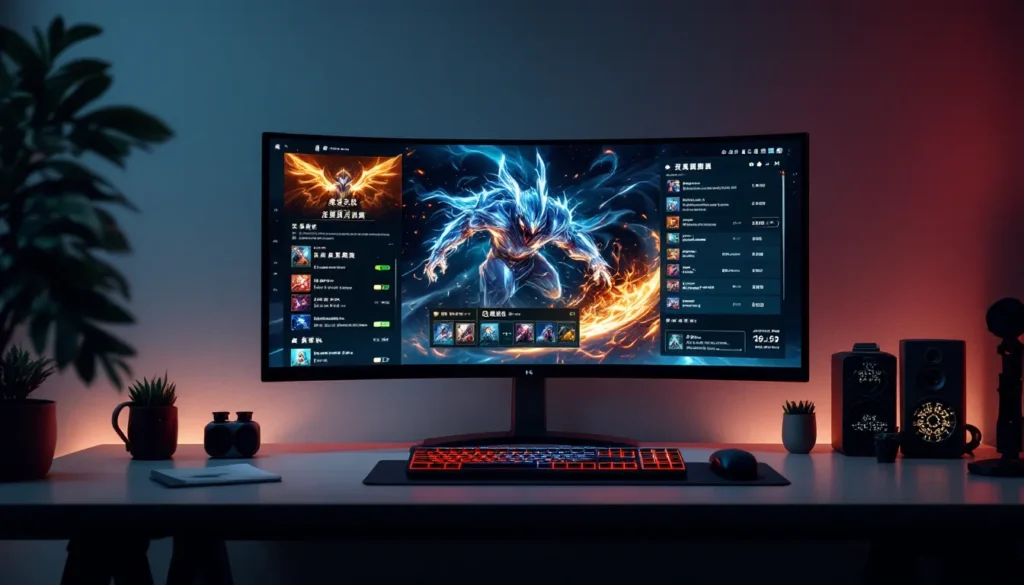
Once you’re in, the Chinese client layout mirrors the Western version structurally but with localized text and some reorganized elements. The main menu displays Play, Shop, Collections, and Social tabs in similar positions. The ranked queue, draft pick, and ARAM modes are all there, same queue options you’re used to, just in Simplified Chinese characters.
The shop interface is one area where terminology shifts slightly. Items retain their functional names in game (伤害、防御、魔法 etc., meaning damage, defense, magic), but UI labels for purchasing and builds use different phrasing than Western clients. If you’re coming from NA or EU, expect a 10-15 minute adjustment period before muscle memory kicks in.
One immediate difference: the client feels snappier on good hardware and includes a built-in streaming integration with Chinese platforms (Bilibili, Huya, DouYu) rather than Twitch. If you plan to spectate pro matches or community streams, you’ll be navigating Chinese streaming sites, more on that in the esports section.
Unique Features in the Chinese Version
The Chinese client includes several exclusive features absent from Western versions. The most notable is the battle pass equivalent, which operates slightly differently in monetization and rewards compared to NA’s system. Tencent bundles cosmetics, champion shards, and cosmetic orbs in ways that sometimes feel more generous than Western battle passes, though pricing fluctuates with regional events.
Another standout: the mentor system is more robust. Newer players can officially pair with mentors for ranked climb progression, and the game provides structured rewards for both mentor and mentee. This isn’t a casual feature in China, it’s deeply integrated into the early-game experience and community building.
The Chinese version also features region-exclusive cosmetics released on a different schedule than the West. Legendary and mythic skins debut here first, sometimes months before Western release. If you’re a skin collector or care about limited-edition cosmetics, the Chinese server offers content that might never appear on your home region’s store.
Finally, the client includes a more prominent community news feed with deeper integration into Chinese esports coverage, regional tournaments, and server-specific patch notes. This makes staying informed about meta shifts and upcoming changes much easier if you read Chinese or use translation tools.
Gameplay Differences: Champions, Skins, and Content Variations
Champion Roster and Balance Changes
Champion rosters are identical across regions in terms of available champions, every champion released on NA and EU is available on the Chinese server at the same time. But, balance patches often diverge. Tencent runs independent balance testing on the Chinese server, meaning a champion might receive a nerf or buff in China weeks before it hits Western servers, or not at all.
This is crucial for competitive players and meta enthusiasts. A champion considered weak on NA might be tier-1 on the Chinese server due to regional patch philosophy. Conversely, a dominant champion in the West might have been gutted in China months prior. If you’re tracking the global meta or preparing for international tournaments, monitoring Chinese patch notes separately is essential.
The reasoning behind divergent patches is sound: the player base, playstyle tendencies, and ranked distribution differ significantly. Chinese players skew toward early aggression and objective-focused play compared to Western servers, so Tencent balances accordingly. Before building a ranked climb strategy on Chinese servers, check recent patch notes, your go-to NA champions might not translate directly.
Exclusive Skins and Cosmetics
This is where the Chinese server truly shines for collectors and cosmetics enthusiasts. Exclusive skin lines debut on the Chinese server, sometimes years before Western release, if they ever come at all. Certain limited-edition skins, regional-specific cosmetics, and collaboration skins (particularly with Chinese IP and entertainment properties) remain China-only.
For example, prestige skins and ultimate tier cosmetics often release in China first as a testing ground. If a cosmetic performs well commercially in China, it eventually makes its way to NA and EU. If it underperforms, Western players never see it. This creates a unique situation: collectors interested in owning the most complete skin library need access to the Chinese server.
Skin pricing also varies. Legendary skins on the Chinese server sometimes cost less than their Western equivalents in blue essence exchanges, making them a better value for essence-focused players. The shop rotation is independent, so limited-time cosmetics appear on different schedules.
Regional Events and Limited-Time Game Modes
China hosts exclusive seasonal events tied to Chinese culture, holidays, and local gaming traditions. Lunar New Year events in China are significantly more elaborate than Western holiday events, featuring unique game modes, cosmetics bundles, and narrative experiences. These events sometimes introduce mechanics or game modes that later influence global League of Legends design.
Regional limited-time game modes (RGMs) vary in frequency and type. The Chinese server receives certain RGMs months before Western servers, allowing for community feedback and balance adjustments before global release. If you want to test drive upcoming game modes early, the Chinese server is your beta testing ground.
Tournament seasons also align differently. The LPL season runs parallel to your region’s competitive calendar but operates independently, meaning championship skins and battle pass cosmetics tied to LPL results release on different timelines. If you’re invested in esports cosmetics, tracking both timelines is necessary.
Playing Competitively: LPL and Chinese Esports Scene
Understanding the LPL (League of Legends Pro League)
The LPL (英雄联盟职业联赛) is the pinnacle of professional League of Legends in China and arguably the world’s most competitive regional league. Seventeen teams compete in a franchise structure with investment from major Chinese tech and entertainment companies. The level of play is consistently higher than other regions, LPL representatives have won four World Championships (2014, 2015, 2018, 2022) and consistently place multiple teams in Worlds semifinals.
What makes the LPL unique is the playstyle philosophy. Chinese teams prioritize early game pressure, coordinated objective control, and macro play over mechanical outplays. If you watch LPL matches, you’ll notice significantly fewer 1v5 pentakill highlights and far more deliberate, calculated victories. This translates to the ranked meta on Chinese servers: aggressive early game comps, team fighting, and objective-focused strategies dominate much more than on Western servers.
The regular season runs from January to September, with playoffs and regional qualifying tournaments determining the Worlds representative. Spring and Summer splits exist just like other regions, but the competitive intensity and sponsorship investment dwarf NA and EU leagues. If you’re serious about understanding high-level League of Legends strategy, watching the LPL is non-negotiable.
How to Watch Pro Matches and Follow Top Teams
Watching the LPL requires access to Chinese streaming platforms. The primary official broadcaster is Bilibili, with matches also streamed on Huya and DouYu. Bilibili streams offer high-quality production, English commentary is increasingly available for major matches, and the platform features clips and highlight channels.
To find LPL content in English, your best bet is checking LoL Esports for official match schedules and links, though you’ll be redirected to Bilibili for the actual broadcast. Alternatively, content creators on YouTube compile English-casted highlights from LPL matches, though there’s a delay versus live broadcasts.
Top teams to follow if you’re new to the LPL: FunPlus Phoenix (multiple Worlds winners), EDward Gaming (consistent powerhouse), Invictus Gaming (international titles), and Top Esports. These teams represent the league’s elite tier and showcase the most refined meta gameplay.
For staying updated on roster changes, transfer news, and match results, Game8 provides comprehensive tier lists and meta analysis including LPL-specific breakdowns. Combining official LPL sources with Game8’s meta coverage gives you both live competitive insight and analytical depth. Many Western players who’ve climbed ranks using LPL strategies report significant improvement, the region’s macro-focused approach is highly teachable.
Language and Communication Tips for Western Players
Learning Essential Chinese Gaming Terminology
You don’t need fluent Mandarin to play on the Chinese server, but knowing essential gaming terms dramatically improves the experience. Most critical in-game communication happens through pings, but understanding basic terminology helps with item names, ability descriptions, and chat interactions.
Key terms every Western player should know:
- GG (好的 or 行) = OK/Agree
- Nice play (牛逼, niúpì or 秀, xiù) = Expressing respect for a good play
- Jungler (打野, dǎyě) = The jungler role
- Mid lane (中路, zhōnglu) = Midlane
- ADC (下路, xiàlu) = Bottom lane/ADC
- Support (辅助, fǔzhù) = Support role
- Tower/Turret (塔, tǎ) = Same as English
- Baron (大龙, dàlóng) = Literally “big dragon”
- Dragon (小龙, xiǎolóng) = Literally “small dragon”
- Surrender (投降, tóuxiáng) or FF = Forfeit
Champion names are transliterated but recognizable: Lee Sin is 李青 (Lǐqīng), Ahri is 阿狸 (Ālǐ), Yasuo is 亚索 (Yàsuǒ). After a few games, you’ll intuitively recognize them.
Items retain functional names rather than direct translations. Bloodthirster is 斯特拉克的挑战 (different item name), and Zhonyas Hourglass is 中亚沙漏 (Zhōngyà shālóu). Most Western players just remember icons rather than names anyway, so this isn’t a dealbreaker.
In-Game Communication and Ping Systems
The ping system is your friend. Chinese players rely heavily on pings for coordination, and good ping usage transcends language entirely. Master these:
- Default ping (click) = General attention needed
- Danger ping (Ctrl+click) = Danger/enemy missing
- On my way (Alt+click) = I’m rotating here
- Hold/Stay (Shift+click) = Stay in lane, don’t push
Ping spam is culturally frowned upon on the Chinese server even more than Western regions. Ping strategically, don’t spam, Chinese players respond better to disciplined communication.
Typed chat is optional but useful. Most flame goes untranslated anyway, and simply typing GG or acknowledging good plays with quick phrases builds rapport. If someone types something you don’t understand, it’s usually not critical callout info, the pings carry the strategic weight.
Voice comms aren’t integrated into the client like Western Discord setups. Chinese ranked play relies on pings and minimalist typing. If you queue with friends, external platforms (WeChat, QQ) are standard, but solo queue communication is ping-centric.
One cultural note: Chinese players tend toward positivity in all-chat post-game. Typing ‘gg wp’ (good game, well played) is appreciated. Flame is less common in solo queue than you’d expect, and players who engage in extended toxicity face reports and penalties more swiftly than Western servers.
Potential Challenges and How to Overcome Them
Connection and Latency Issues
If you’re playing from outside mainland China, connection stability is your first hurdle. The Chinese servers are geographically optimized for players within China’s borders, meaning Western players experience higher ping. From North America, expect 120-150ms baseline: from Europe, 150-180ms. This is playable but not ideal for high-elo mechanically intensive matchups.
To minimize latency, use a premium VPN service optimized for gaming. Standard consumer VPNs introduce additional lag and packet loss. Services like Astrill, ExpressVPN, and CyberGhost have dedicated gaming optimizations. Expect costs of $8-12/month, but the stability improvement justifies the expense if you’re serious.
Alternatively, some Western players use gaming-specific proxy services designed specifically for routing League of Legends traffic. These are cheaper ($3-5/month) but less stable than premium VPNs. Research community recommendations on Reddit’s r/leagueoflegends before committing.
Latency expectations: if you main mechanically simple champions (top laners, supports, macro-focused roles), the added ping is tolerable. If you’re a mid-lane mechanical player used to sub-50ms NA ping, the adjustment is significant. Practice tool time helps, get acclimated to the input delay before jumping into ranked.
Critical note: while a VPN isn’t technically required once the client is installed, connection reliability from Western locations is substantially worse without one. You’ll experience random disconnects and packet loss spikes that make ranked unplayable.
Account Restrictions and Region-Locking Policies
Tencent enforces region-locking on accounts. Once created on the Chinese server, your account is locked there permanently. You can’t access it from NA or EU, and you can’t migrate progression to another region. If you later want to play on your home server, you start completely fresh.
There’s also the ID verification issue at higher ranks. Tencent requires ID verification for accounts climbing to Diamond rank and above. This is enforced to prevent account sharing and smurfing at competitive levels. If you’re using borrowed credentials or proxied information, you risk suspension during verification checks. Play at your own risk if your account isn’t legitimately tied to Chinese identity info.
Bans and suspensions follow Tencent’s policies, which are stricter than Western regions. Excessive flame, account sharing, boosting, or using VPNs (technically against ToS but loosely enforced) can result in account locks. Most Western players don’t face issues if they play legitimately, but understanding the enforcement difference is crucial.
One additional consideration: the Chinese client collects more user data than Western versions. This aligns with Chinese data privacy standards and Tencent’s business model. If you’re privacy-conscious, be aware that playing on Chinese servers means accepting a higher level of telemetry and data collection than NA or EU.
Even though these restrictions, thousands of Western players maintain active Chinese accounts for years without issues. The key is understanding the rules and playing within them, don’t treat it like a throwaway account.
Conclusion
Playing League of Legends in Chinese isn’t just about geographic novelty, it’s accessing the world’s most competitive server, experiencing exclusive cosmetics, and tapping into the esports ecosystem that shapes the game’s global meta. The Chinese region produces championship-level plays, influences patch balance worldwide, and hosts some of the highest-quality competitive League of Legends on the planet.
For Western players, the barriers are real: account creation requires Chinese credentials, connection requires optimization, and language creates friction. But none of these obstacles are insurmountable for players genuinely interested in expansion. If you climb using League of Legends strategies rooted in macro and objective control, the Chinese meta aligns naturally with your approach. If you’re interested in studying pro play, watching the LPL showcases the most refined strategic gameplay available.
Start with a clear goal: are you chasing cosmetics? Competing at higher ranks? Studying competitive meta? The motivation determines whether the friction is worth it. Most players who stick with Chinese servers do so because the competitive environment pushes them harder and faster than Western alternatives.
Once you’re in, stay updated on patch differences between regions, leverage the ping and communication systems, and don’t underestimate the cultural differences in playstyle. The Chinese server rewards team coordination and macro excellence, play accordingly. With preparation, a VPN, and realistic expectations about connection, you’ll find the Chinese League of Legends experience genuinely competitive and rewarding.