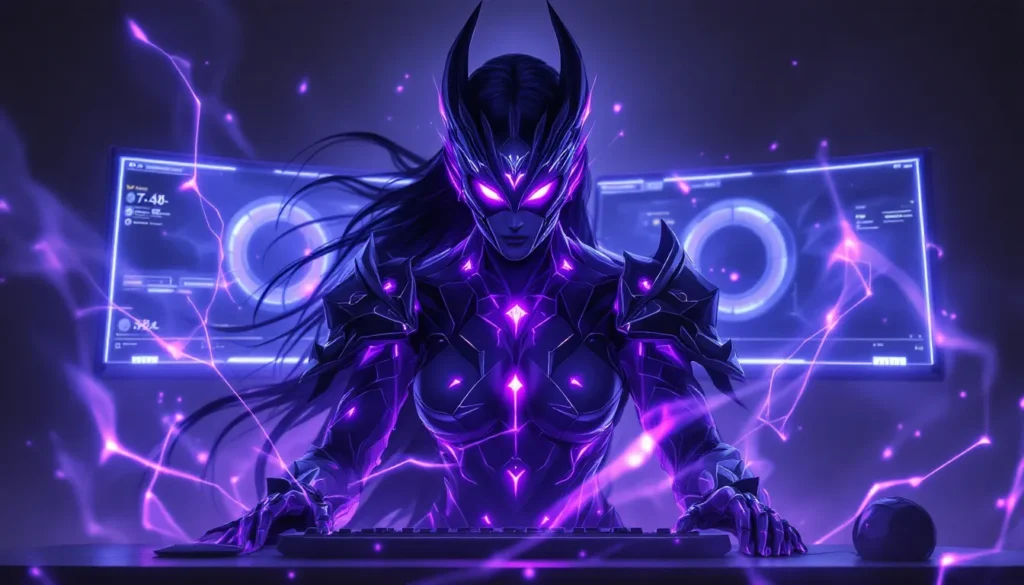

The darkness in League of Legends isn’t just a visual theme, it’s woven into the DNA of the game’s most compelling champions, skins, and lore. Whether you’re drawn to the cosmic horror of The Void, the gothic dread of Shadow Isles, or the corrupt ambition of Noxus, dark League of Legends content offers some of the deepest storytelling and most mechanically interesting gameplay the MOBA has to offer. In 2026, Riot Games continues expanding this darker aesthetic across new champions, prestige skin lines, and narrative events that reshape how we understand the game’s world. This guide dives into what makes dark League of Legends resonate with players, from the lore that drives character design to the meta strategies that make these champions viable in competitive and casual play alike.
Table of Contents
ToggleKey Takeaways
- Dark League of Legends champions like Mordekaiser, Kai’Sa, and Vel’Koz combine compelling lore with mechanically overloaded kits that reflect their thematic identity and create oppressive gameplay experiences.
- The Void represents cosmic horror and existential dread, expanding beyond its original borders to corrupt other regions—making Void champions feel intentionally overpowered because they operate outside Runeterra’s normal rules.
- Dark skins such as PROJECT, K/DA DARK, Prestige editions, and Star Nemesis elevate the dark League of Legends aesthetic through visual storytelling, particle effects, and psychological impact that enhances both casual enjoyment and competitive play.
- Shadow Isles champions embody different interpretations of darkness through betrayal, supernatural corruption, and tragic circumstances—creating narrative depth that makes them more compelling than one-note villains.
- Itemization for dark League of Legends champions requires specific build paths: Kai’Sa scales with hybrid AD/AP, Kog’Maw maximizes on-hit damage through attack speed, and Mordekaiser stacks AP with health for persistent zone control.
- The 2026 season continues expanding dark League of Legends through new Void champions, rebalanced mechanics, seasonal events, and competitive-level strategic development that positions darker content as a core aesthetic pillar of the game.
Understanding The Dark Aesthetic in League of Legends
What Defines Dark Champions and Skins
Dark in League of Legends means different things depending on context. A dark skin might emphasize shadow, corruption, or cosmic dread, think the twisted geometry of PROJECT skins versus the ethereal horror of Star Nemesis variants. What ties them together is intentional visual storytelling: darker color palettes, unsettling particle effects, and ability animations that feel menacing or unnatural.
Champions themselves fall into dark archetypes based on their thematic identity. Mordekaiser embodies death magic and tyranny. Evelynn represents seduction and pain. Kha’Zix channels predatory evolution. These aren’t arbitrary design choices, Riot builds gameplay mechanics that reinforce the dark fantasy or sci-fi concepts. A dark champion’s kit often feels oppressive to play against: crowd control, percentage damage, execute mechanics, or sustained pressure that wears opponents down psychologically and mechanically.
The visual language matters too. Dark League of Legends skins use lower saturation, sharper edges, and ominous glows. Prestige editions crank up the contrast and add ethereal effects. When you equip a dark skin, you’re not just changing cosmetics, you’re embracing a different power fantasy.
The Void: League’s Darkest Faction
The Void is League’s cosmic horror faction, and it’s the closest the game gets to pure existential dread. Unlike human factions with politics and morality, The Void represents corrupting influence from outside reality itself. Champions like Kog’Maw, Vel’Koz, Kha’Zix, and Kai’Sa all tie back to Void corruption, but each expresses it differently.
Kog’Maw is a curious, almost innocent creature from The Void’s depths, dangerous because of what it is, not its intent. Vel’Koz is a reconnaissance organism seeking to understand and eventually consume reality. Kha’Zix evolved into a predator by absorbing Void essence. Kai’Sa survived Void corruption and now hunts those influenced by it. Their stories intersect around themes of infection, adaptation, and the corruption of familiar things into something unrecognizable.
What makes The Void compelling in dark League of Legends lore is that it can’t be negotiated with or understood through traditional conflict. It simply consumes. Recent narrative updates have shown The Void expanding beyond its original borders, corrupting other regions and champions. This creates narrative tension that bleeds into gameplay, Void champions feel slightly “off,” mechanically overloaded in ways that feel unfair because the faction itself shouldn’t play by normal rules.
Champion Spotlight: The Darkest Characters in League
Void Champions and Their Abilities
Void champions are designed to feel wrong in the best way possible. They’re mechanically complex and often overloaded because that reflects their nature, organisms adapted from a realm that doesn’t follow the rules of Runeterra.
Kai’Sa (ADC/Assassin hybrid) uses Void armor as both offensive and defensive tool. Her Passive (Second Skin) converts a percentage of her AD into AP, making her scale with hybrid builds. Q (Icathian Rain) fires missiles in a cone with extended range, W (Void Seeker) is a ranged skillshot that marks targets for execution damage, and E (Supercharge) grants movement speed and attack speed. Her R (Killer Instinct) dives toward an ally or isolated target, offering both engage and escape.
Kog’Maw (ADC/Mage) is sustained damage turned up to eleven. His Passive (Icathian Surprise) detonates on death, dealing AoE damage. Q (Caustic Spittle) reduces MR and deals damage. W (Bio-Arcane Barrage) converts his attacks into AoE volleys that scale with max health, crucial for tank-shredding. E (Void Ooze) is a slow skillshot. R (Living Artillery) is an execute-oriented poke tool that deals percentage max health damage.
Vel’Koz (Mid/Support) works as pure control and zone denial. His Passive (Organic Deconstruction) stacks on champions hit by abilities and triggers true damage explosions. Q (Plasma Fission) bounces off terrain for complex geometry. W (Void Rift) creates damaging zones. E (Tectonic Disruption) is a knockback that reveals terrain. R (Life Form Disintegration Ray) channels a massive laser that penetrates enemies.
Kha’Zix (Jungle/Top) is a mobile assassin that evolves throughout the game. Each evolution (Q isolation damage, W slow and tracking, E range and reset, R invisibility duration) changes his playstyle. His Passive (Unseen Threat) grants bonus damage when enemies can’t see him.
Shadow Isles and Noxus: Darkness Beyond The Void
If The Void is external horror, Shadow Isles is internalized corruption. Champions tied to Shadow Isles, Thresh, Mordekaiser, Hecarim, Kalista, explore themes of death, soul imprisonment, and the perversion of human emotion through undeath.
Thresh (Support) is crowd control incarnate. His Q (Death Sentence) hooks enemies for reliable engage. W (Dark Passage) shields allies and creates save mechanics. E (Flay) knocks enemies in directions of his choosing. R (The Box) traps enemies with walls that trigger slows. He’s a playmaking support whose power comes from positioning and reading enemy movements.
Mordekaiser (Top/Mid) is pure dominance. After his 2019 rework, he became a persistent threat who scales into the late game through Passive (Darkness Rise) AoE DPS, Q (Obliterate) close-range damage that resets on kills, W (Indestructible) shields, E (Death’s Grasp) ranged pull-and-damage, and R (Realm of Death) which isolates an enemy in a 1v1 and steals a portion of their stats permanently for the fight. He’s a scaling nightmare if left unchecked.
Hecarim (Jungle/Top) channelizes dark knight fantasy into a ghostly rider. His E (Devastating Charge) combines movement speed into knockback and damage. R (Onslaught of Shadows) is an AoE fear ultimate that’s crucial for teamfight initiation.
Noxus champions like Darius, Swain, and Draven represent darkness through tyranny and martial conquest rather than supernatural horror. They’re bullies with high early game pressure and execution mechanics that reward aggressive play.
Dark Skins and Cosmetics: Elevating Your Gameplay Aesthetic
Project, K/DA Dark, and Prestige Skin Lines
Skins are the primary way players customize their dark League of Legends experience. While stats remain unchanged, the psychological impact of operating with menacing visuals and audio cues is real, and pros acknowledge it.
PROJECT skins lean cyberpunk-noir. These chromas feature sleek metallics, neon accents, and futuristic geometry. Champions like PROJECT: Jhin, PROJECT: Vayne, and PROJECT: Pyke use the skin line to telegraph power through visual clarity. The particle effects are sharpened, ability animations feel precise, and the overall presentation screams calculated danger. As of 2026, PROJECT skins remain one of the most successful skin lines because they enhance readability while being visually compelling.
K/DA skins took a different approach, fusing pop culture with League’s universe. K/DA DARK versions (released as part of the K/DA: ALL OUT event) added a shadow aesthetic to the pop star theme. Akali, Ahri, Kai’Sa, and Evelynn received darker chromas and cosmetic variants that traded neon pop for cyberpunk menace. They’re less “unsettling” than “edgy alternative,” but they fit the dark League of Legends aesthetic for players who want style without pure horror.
Prestige skins are the aspirational tier of cosmetics. They feature exclusive color schemes, usually gold accents on darker bases, enhanced particle effects, and sometimes unique emotes or recalls. The grind to earn Prestige through events or currency creates exclusivity. Prestige skins of dark champions like Prestige Evelynn, Prestige Thresh, and Prestige Mordekaiser elevate their already imposing designs into trophy-tier status.
Star Nemesis and Other Cosmic Dark Themes
Star Nemesis is dark League of Legends at its most thematic. Launched as an event skin line, Star Nemesis represents corrupted celestial entities, cosmic horror meets space opera. Champions in this line (including Kog’Maw, Kha’Zix, and others) use otherworldly particle effects, muted color palettes dominated by grays and purples, and ability animations that feel alien.
What makes Star Nemesis effective is restraint. Unlike PROJECT’s neon clarity, Star Nemesis uses darkness to create mystery. You see silhouettes and vague shapes before sudden, jarring damage bursts. It’s thematically coherent, these are entities from beyond comprehension.
Other cosmic dark skin lines include Coven (witchcraft and moonlit ritual), Infernal (demonic fire and lava), Shadow & Fortune (pirate darkness), and Pulsefire (future-noir dystopia). Each adds depth to how players perceive their champions. The cosmetic choice becomes part of champion identity.
Specialized cosmetics beyond skins, borders, emotes, recalls, and finishers, amplify the dark aesthetic. A dark champion with matching cosmetics becomes a complete visual package that intimidates opponents and satisfies players seeking cohesive dark League of Legends presentation.
Dark Lore and Storytelling in League of Legends
The Void’s Expansion and Reality Corruption
Riot’s 2023-2026 narrative arc centers on The Void’s expansion beyond its original borders. This isn’t passive lore, it’s actively reshaping the game world. Champions previously unconnected to Void themes are now facing corruption. Regions are showing Void influence. The story drives gameplay changes and new champion designs.
The expansion works because it raises stakes. The Void isn’t a contained villain faction you defeat and move on from, it’s an existential threat that keeps growing. Runeterra’s defenders (champions like Kai’Sa, Xayah, and others) work to contain it, but containment is temporary. Each new champion released with Void corruption shows the threat’s reach expanding.
This narrative weight adds depth to dark League of Legends gameplay. Playing Void champions feels like you’re embracing the corruption Runeterra fears. The moral ambiguity, Void champions aren’t “evil” in a traditional sense: they’re agents of change from a realm that operates outside morality, creates interesting character motivation. Vel’Koz isn’t trying to conquer: it’s trying to understand and document reality before consuming it. That’s philosophically darker than simple villainy.
Recent events have shown Void influence spreading to unexpected champions and regions. Shadow Isles champions now face Void corruption as a secondary threat. Noxus borders are being tested. This expanding threat creates narrative coherence across champion releases and skin lines.
Mordekaiser, Thresh, and Champions of Darkness
Mordekaiser embodies death magic and the perversion of strength through unnatural power. His rework repositioned him from a tanky fighter into a scaling threat with unique mechanics (R stealing permanent stats). Lore-wise, he’s a conqueror who refuses to stay dead, pulling souls into his realm. He represents the Shadow Isles at its most domineering.
Thresh is the Warden of Souls, a jailer who collects imprisoned spirits in his lantern. His lore is tragic, he was a jailer before Shadow Isles corruption twisted him into something worse. Now he hunts souls with cruel intentionality. His gameplay (hook-based engage, defensive saving mechanics) mirrors his character: he controls where fights happen and who gets punished.
Kalista, the Spear of Vengeance, represents betrayal and the corruption of honor. She was a noble warrior betrayed and executed, now driven by vengeance. Hecarim was a knight corrupted into undeath. Elise made dark pacts with Spider Demons. Evelynn feeds on human pain and suffering. Each Shadow Isles champion has a distinctive reason for darkness, corruption, betrayal, deliberate choice, tragic circumstance, which makes them narratively richer than one-note villains.
The storytelling approach makes dark League of Legends lore compelling because it examines what darkness means. Is it supernatural corruption? Moral choice? Victimization and the desire for vengeance? Riot explores these questions through champion stories, cinematics (Awaken, K/DA, Arcane tie-ins), and ongoing narrative events. This depth is why dark champions resonate with players, they’re not just mechanically interesting: they’re thematically coherent.
Dark League of Legends Gameplay: Strategy and Meta
Building and Itemizing Dark Champions
Dark League of Legends champions require specific itemization to maximize their identity. A Void ADC like Kai’Sa or Kog’Maw itemizes differently than traditional ADCs because of how their scaling works.
Kai’Sa scales with hybrid AD/AP through her Passive. Core items include:
- Manamune or Muramana for AD scaling and mana
- Nashor’s Tooth for AP and attack speed
- Void Staff for magic penetration
- Deathcap for AP amplification
- Guardian Angel for survivability
The build path converts her into a sustained threat that shreds tanks while maintaining burst potential. Recently (2026 season), Manamune-into-Nashor’s into Deathcap became standard because it maximizes her hybrid conversion.
Kog’Maw itemizes for max health shred and attack speed:
- Kraken Slayer or Immortal Shieldbow for first item (matchup dependent)
- Runaan’s Hurricane for AoE application
- Blade of the Ruined King or Void Staff for penetration
- Wits’ End or Nashor’s Tooth for secondary scaling
His W (Bio-Arcane Barrage) applies on-hit effects, so attack speed and on-hit items multiply his damage. The build emphasizes range and poke over traditional ADC burst.
Mordekaiser as a top/mid bruiser scales with AP and tankiness. Standard builds (2026 meta) include:
- Rylai’s Crystal Scepter for slow and health
- Liandry’s Torment for persistent damage
- Demonic Embrace for health and damage scaling
- Zhonya’s Hourglass for defensive itemization
His Passive (Darkness Rise) applies Liandry’s repeatedly, turning him into a zone control threat. The itemization philosophy: maximize health and AP so his Q resets extend fights indefinitely.
Thresh itemizes as a support for tankiness and engage tools:
- Locket of the Iron Solari for team protection
- Hollow Radiance for resilience
- Force of Nature or Kaenic Rookern for resistance
- Plated Steelcaps or Mercury Treads for boot choice
Support itemization (season 2026) emphasizes mythic items that amplify team value. Thresh prioritizes crowd control reliability through items that keep him alive to land hooks.
Matchups and Playstyle Tips for Shadow-Focused Champs
Dark League of Legends champions thrive in specific matchups and fall apart in others. Understanding these dynamics is crucial for ranked success.
Kai’Sa struggles against poke-heavy supports like Zyra or Lux early but outscales them dramatically. Her strategy: survive early game through careful positioning, farm safely, and abuse her range advantage post-mythic. She excels into melee ADCs and benefits from supports with peel like Braum or Lulu.
Kog’Maw loses to all-in comps (Graves, Trundle junglers) and supports like Nautilus. His playstyle demands respect from his team, he needs protection to function. In favorable matchups (poke-heavy bot lanes), he pokes enemies until they’re forced to fight at a disadvantage.
Vel’Koz support counters engage-heavy playmaking. Champions like Thresh or Blitzcrank struggle against his zoning W and E knockback. He excels into immobile ADCs but gets outtraded by champions with sustain or shields.
Mordekaiser has clear windows for scaling. Early game (levels 1-5) he’s vulnerable to ganks and ranged abuse. His playstyle: minimize deaths early, farm safely, abuse E (Death’s Grasp) range to poke opponents. Once he hits R (Realm of Death) at level 6, he becomes a kill threat in isolated scenarios. His matchup spread is wide, he beats most melee top laners but loses to ranged bullies like Jayce and Teemo.
A player diving into dark League of Legends champions benefits from studying recent competitive builds through resources like Mobalytics tier lists and build guides that break down itemization by patch and elo. Game8’s meta analysis tracks recent changes and winrate trends. The meta shifts seasonally, so 2026 recommendations may differ from previous years, always verify current patch info.
Playstyle philosophy for dark champions: they’re often win-cons in their own right. Mordekaiser can 1v9 if ahead. Evelynn excels at creating pick opportunities. Void champions work best in comp structures that enable their overloaded kits. Understanding your champion as a game plan, not just mechanics, separates competent players from ones who truly master dark League of Legends roster.
Events and Updates: Dark Content in 2026
2026 has delivered substantial dark League of Legends content through events and champion releases. Riot’s roadmap includes new Void champions, expanded Shadow Isles narratives, and cosmetic drops that deepen the dark aesthetic.
Recent events introduced mechanics that tie into The Void’s expansion. Limited-time game modes featured Void-corrupted minions and map modifiers that created thematic gameplay. Event currency allowed players to unlock cosmetics tied to the dark narrative, chromas, emotes, and recalls that reflect Void influence spreading.
New champion releases in 2026 include additions to the Void faction and champions influenced by Shadow Isles corruption. These releases aren’t random, they’re stepping stones in Riot’s multi-year narrative arc. Each new dark champion expands viable team compositions and adds mechanical depth.
Seasonal updates have rebalanced dark champions. Patch 14.8 (early 2026) brought adjustments to Kai’Sa and Kog’Maw to reduce ADC dominance. Mordekaiser received R (Realm of Death) changes that affect stat stealing mechanics, shifting his late-game power curves. These changes keep dark champions relevant without letting them dictate the meta entirely.
Esports tournaments featuring dark champion highlights have elevated their prestige. LoL Esports coverage showcases how pro teams leverage these champions in coordinated play. Watching high-level Kai’Sa burst damage, Mordekaiser isolation, or Vel’Koz zoning from professional matches demonstrates the gap between casual and competitive mastery.
Cosmic horror skins continue dropping as part of seasonal events. Star Nemesis received new champions added to the line. K/DA DARK cosmetics expanded with additional variants. These aren’t purely cosmetic, they signal Riot’s commitment to dark League of Legends as a core aesthetic pillar, not a niche theme.
Conclusion
Dark League of Legends represents the game’s most compelling creative direction, where lore, aesthetics, and gameplay intersect to create champions worth investing in. Whether you’re drawn to The Void’s cosmic horror, Shadow Isles’ gothic tragedy, or the prestige of dark skin cosmetics, there’s depth to explore across mechanical skill expression and narrative investment.
The darkness in League of Legends isn’t decorative. It’s thematic, mechanical, and strategic. Playing these champions means embracing their identity: the oppressive control of Thresh, the scaling inevitability of Mordekaiser, the hybrid flexibility of Kai’Sa, or the otherworldly presence of Void champions. The 2026 season has expanded what’s possible with dark League of Legends content, from new champion additions to competitive-level strategic development. If you’re looking to understand League of Legends at a deeper level, exploring its darker champions and narratives is an excellent starting point for both casual and competitive players alike.